
Section Joints
Where Two Roofs Meet
Expansion joints and transition flashing between an old bay and a new one move differently in heat and cold. They get rebuilt with flexible flashing before any coating goes across.
As a Perkasie metal roof coating contractor, we coat commercial metal roofs, starting with the joints where newer additions meet the original building.
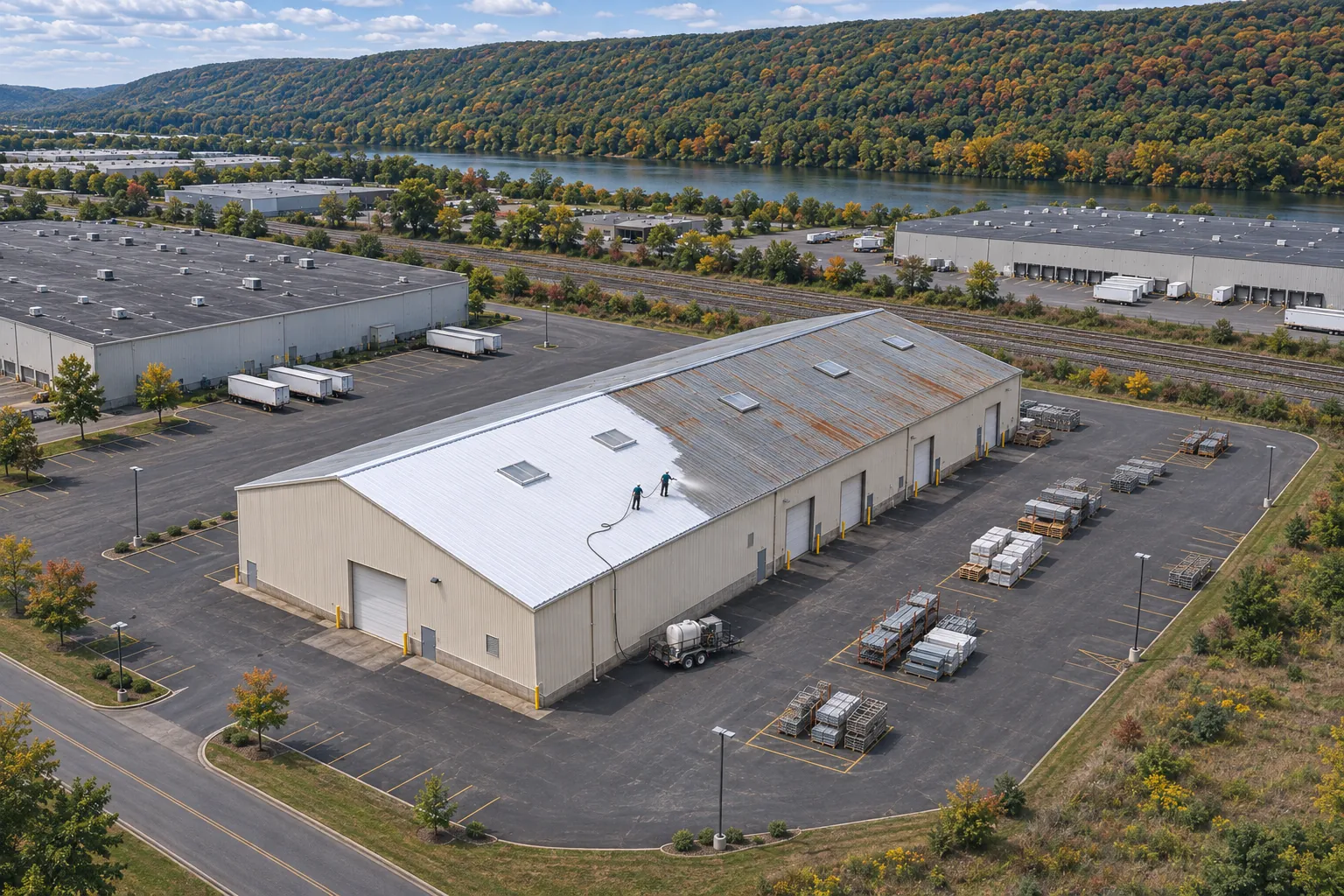
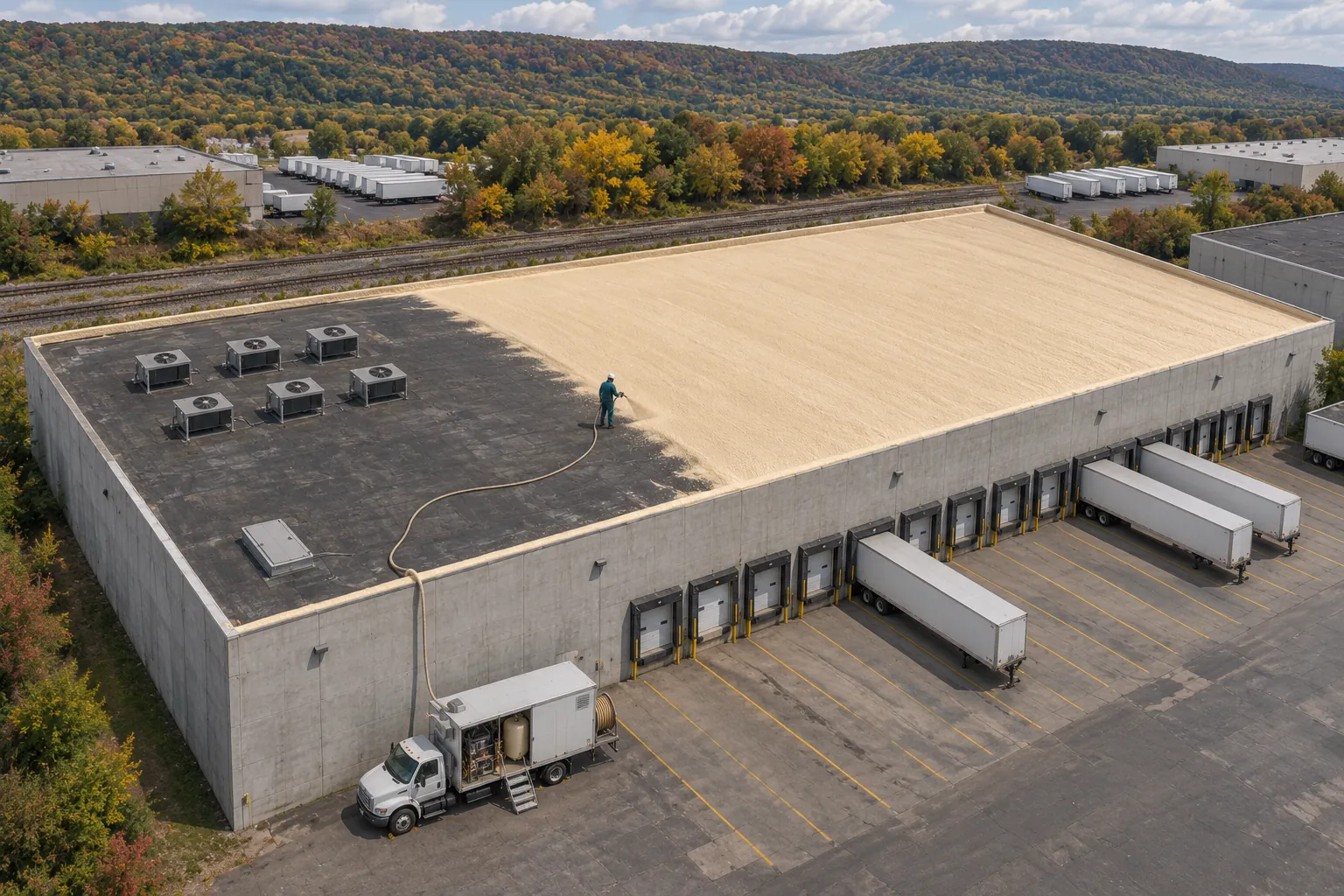
Perkasie metal roof coating often covers buildings that grew in stages, with a newer steel bay set against an older roof. The panels, slopes, and finishes rarely match, and the joint between them is where most leaks start.
We inspect each section as its own roof, then plan the coating so every part gets a finish that bonds to what is already there.
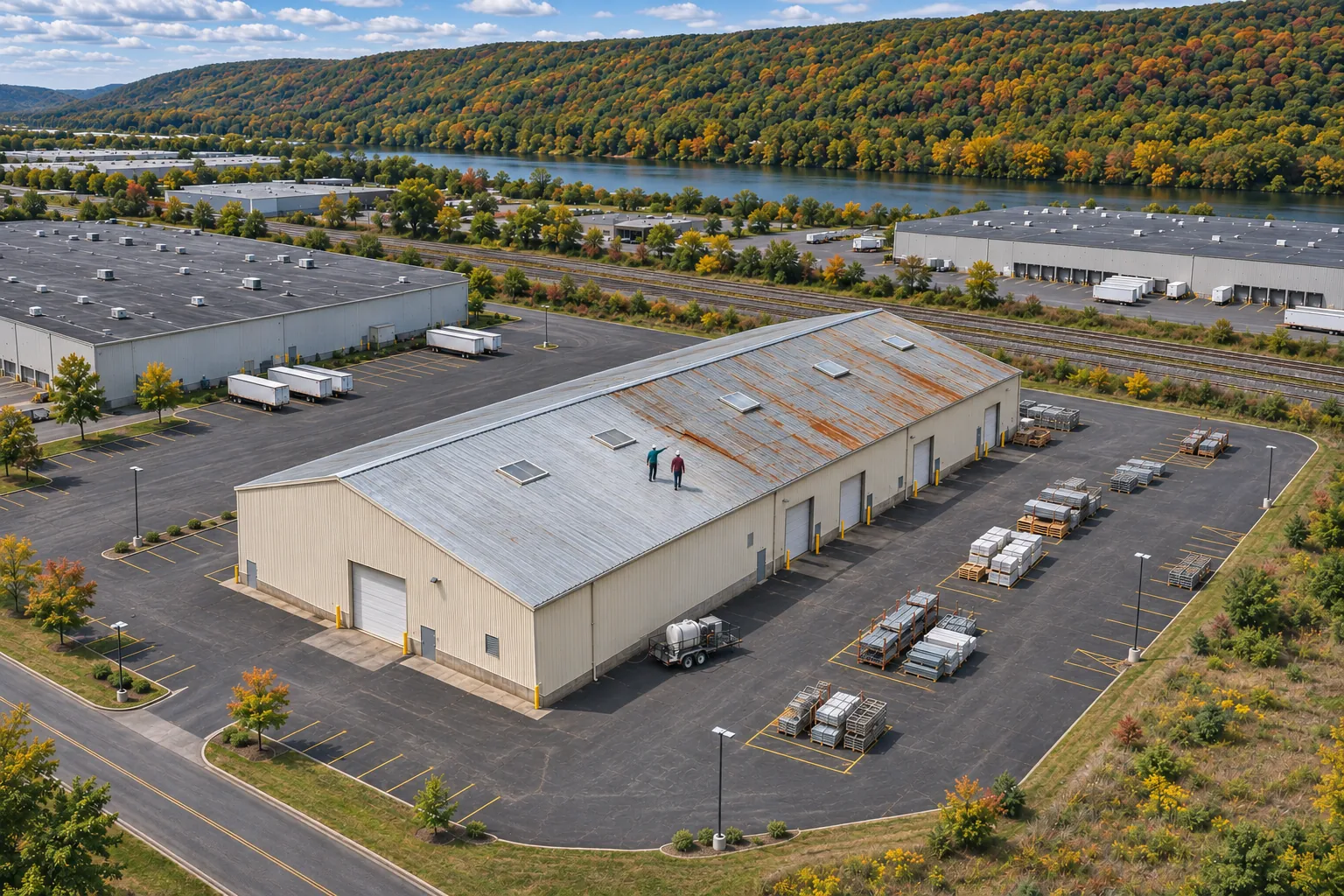
Additions add places for water to get in. These five zones get checked on every section.
Expansion joints and transition flashing between an old bay and a new one move differently in heat and cold. They get rebuilt with flexible flashing before any coating goes across.
A valley between sections takes runoff from both sides, and debris piles up where they meet. Valley metal is cleared, sealed, and checked for rust at the laps.
Different rib heights and spacings mean closures and laps that never quite fit. Gaps are closed with matching foam closures and sealant first.
Earlier jobs sometimes coated one section and left the next bare. Each finish is tested for adhesion and type, because the new coating has to bond to both.
The original bay usually has the oldest fasteners and the driest washers. Those rows get checked screw by screw and replaced where they spin.
On a building made of several roofs, coating ties the sections into one maintained surface.
A single coating system over old and new bays gives one recoat schedule instead of separate plans for each addition.
Reinforced coating carried over the rebuilt transition flashing closes the joint where leaks usually start on additions.
Coating the original roof alongside the addition delays replacing the oldest section while its steel is still firm.
A matching light finish on all sections reduces the hot and cool spots that make old and new panels move differently.
Perkasie buildings with additions usually take one of these approaches.
The same coating over every bay after transitions are rebuilt, with primer chosen per section for the finish found there.
Pitched steel sections get acrylic while a flat addition behind a parapet gets silicone, split at a clean transition.
For roofs with firm panels and a few leaks, reinforcing joints and laps can carry the roof until a full coating is planned.
When the original section has rust-through, replacing those panels and coating the newer additions keeps the work in proportion.
Call or start a ballpark estimate. Tell us roughly when each section was built, since that shapes how the transition is rebuilt.
Get A Free Ballpark EstimateEach roof section gets the same four steps, and the transitions get done before any field coat.
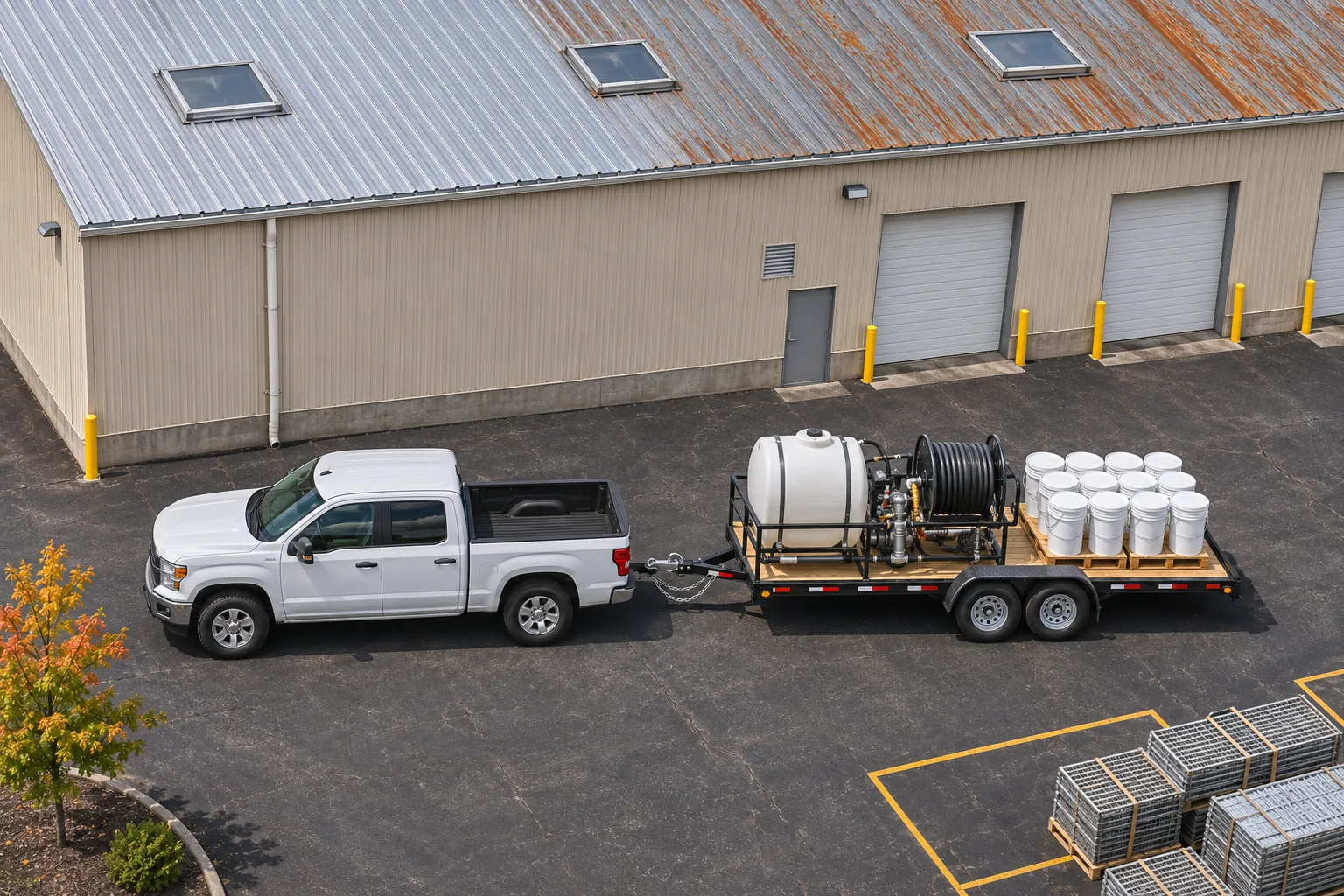
Every section is walked and recorded on its own sheet: panel type, finish, fasteners, and where water travels across the joints between them.
Joints between additions are opened, flashed with flexible material that allows movement, and sealed before anything else gets coated.
Bare paint, rusted areas, and older coatings each get their own cleaning and primer so the new coating grips all of them.
Coating goes over every section in one system, with reinforcement carried across the transitions and laps, and thickness checked on each bay.
We also coat commercial metal roofs in the towns below, from distribution roofs to brick plants. Anywhere else, call us or send us a message.
Answers for owners of buildings with additions.
Our planning range is about $2.50 to $4.00 per square foot for coating and about $5 to $8 for replacement. On buildings with additions, the number of transitions, mixed panel types, and old coatings to test move a coating price around inside that range. The inspection gives you a figure for your roof.
Yes, in nearly every case. Coating happens on the roof, and sections are scheduled so loading areas and entrances stay usable. Spraying near air intakes and work above occupied offices are timed with you, and any short closures are planned before the first day.
Call us or start a ballpark estimate with the building address. Perkasie is one of the towns we serve from Bethlehem, and roofs there get the same inspection and coating sequence as any other job. We set the visit after a short call about the roof.
It should, and ours does. Finishes, drainage, and connections often differ from one addition to the next, so we check every junction and the condition of earlier repairs before defining preparation. Each section gets a surface ready for the coating, rather than assuming every bay takes identical treatment.
Often they need rebuilding. Transition flashing has to let the two roofs move separately, and old rigid flashing cracks at that joint. Where the existing transition is intact and flexible, it gets cleaned, reinforced, and coated over instead.
Send the address and how many roof sections the building has, or call.