Unit Pads
Around Units and Curbs
Heat, vibration, and spilled refrigerant oil break down coatings near units. Residue gets degreased and the curb flashing rebuilt before recoating.
As an Ambler metal roof coating contractor, we find why old coatings peel near rooftop units, remove what is loose, test the bond, and recoat the roof.
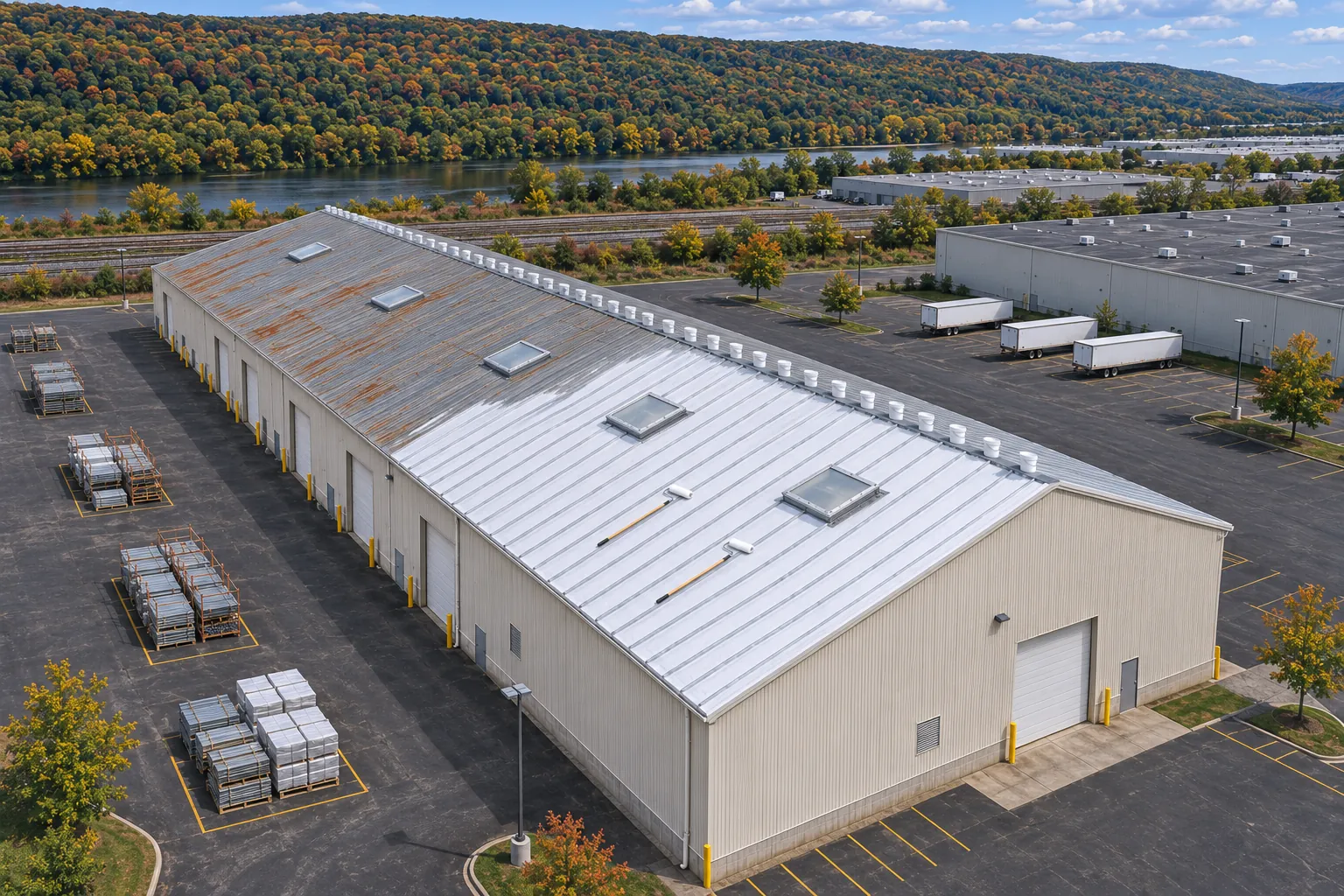
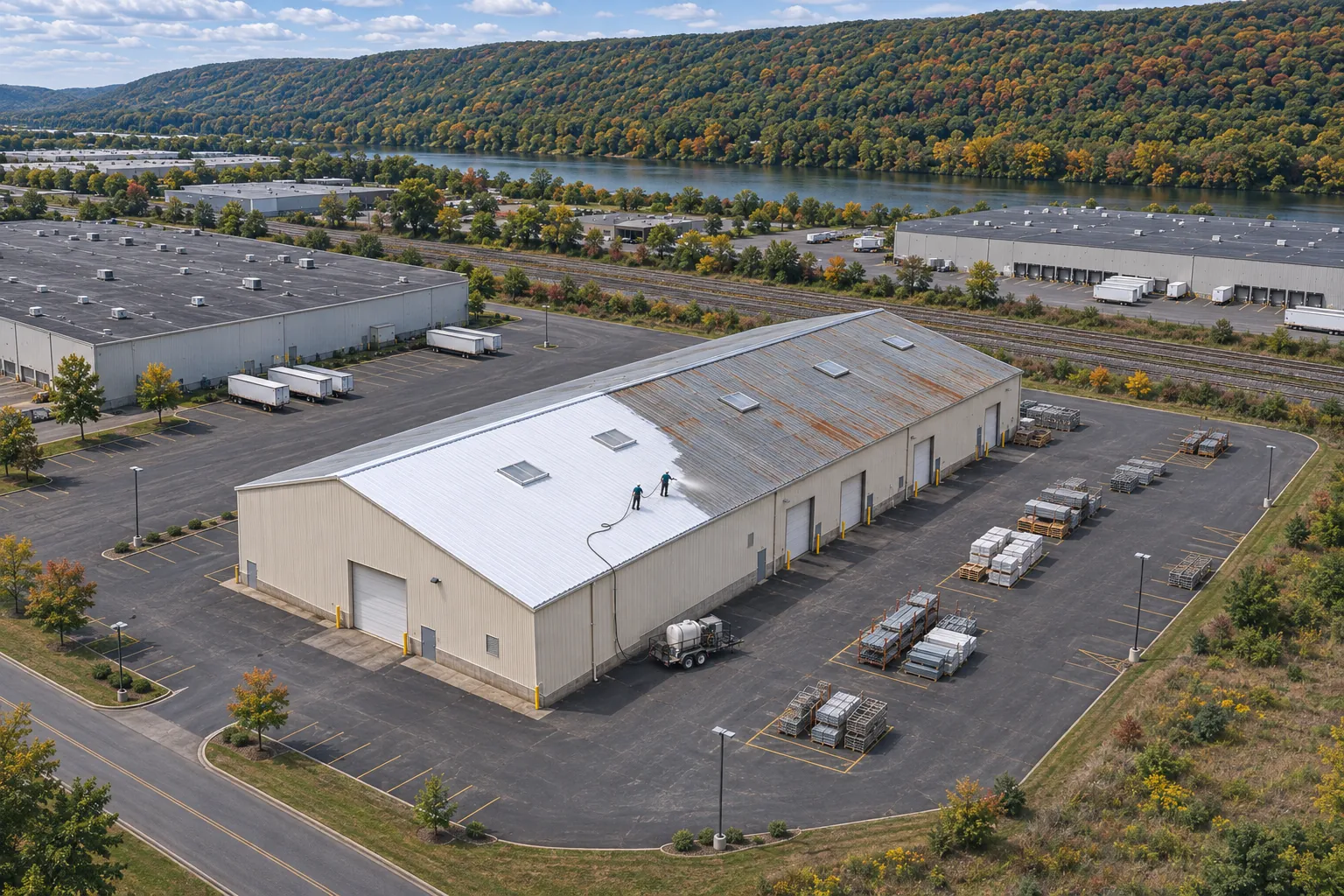
Ambler metal roof coating jobs often start with a finish that is peeling around rooftop equipment. Service traffic, oil and condensate from units, and a poor bond to the layer below all lift coatings, and a new coat over that lifts too.
Loose material comes off down to a layer that holds, and only then does a new coating go on.
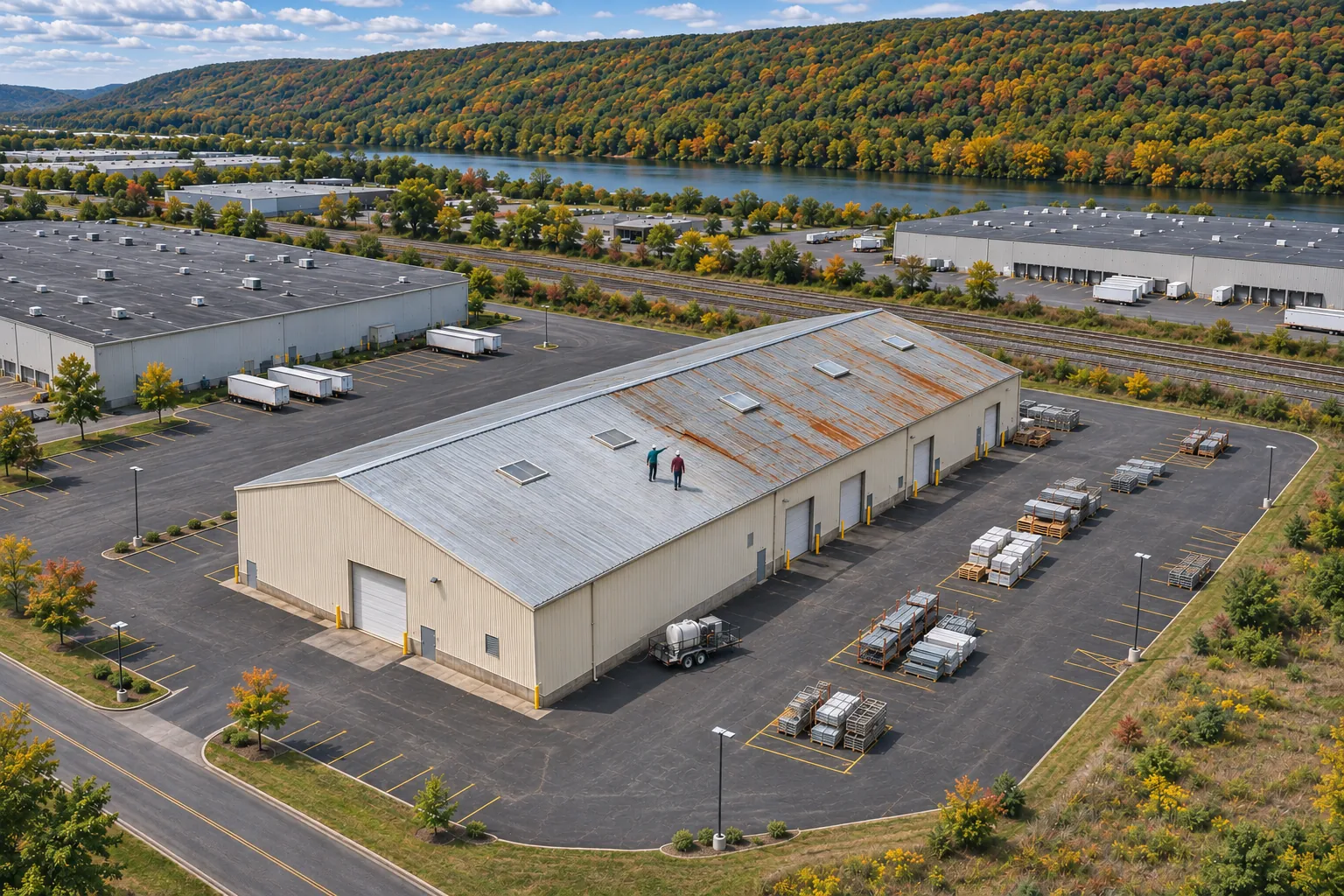
Peeling clusters in five places on equipment-heavy roofs, and each has a different cause.
Heat, vibration, and spilled refrigerant oil break down coatings near units. Residue gets degreased and the curb flashing rebuilt before recoating.
Boots and dragged tools wear through coating on the shortest path to each unit. Those routes get walkway reinforcement in the new system.
Condensate dripping onto panels keeps one spot wet and grows algae. Lines are routed to drains or gutters before coating.
Several earlier coats can stack up with weak bonds between them. Pull tests show which layer holds and how far removal has to go.
Water trapped under peeling coating rusts the steel beneath it. Exposed areas are brushed and primed before any new coat.
With loose layers removed and the bond confirmed, a recoat protects the busiest part of the roof.
Recoating over a layer that passed pull tests keeps the new coating from lifting with the old one.
Reinforced walkway areas take the technician traffic that wore through the old finish around each unit.
Priming the rusted spots found under lifted coating stops corrosion that was hidden from view.
Recoat work around units is scheduled with service staff, so cooling and exhaust stay on through most of the job.
Ambler roofs with peeling finishes usually take one of these approaches.
Loose areas scraped back to a firm edge, primed, and the whole roof recoated with a compatible product.
Where layers fail pull tests near units, the coating comes off to bare metal there before priming and recoating.
Fabric and extra coating thickness along service routes, or walkway pads set into the new system where the product allows.
Silicone near condensate drip points and low areas by units, where water sits more often than on the field.
Call or start a ballpark estimate. Knowing the last coating date and product helps us plan the bond tests.
Get A Free Ballpark EstimateRecoating starts with removal and testing. These steps keep the new layer from failing like the old one.
We map peeling areas, test adhesion with pull tests across the roof, and check what lies under the lifted coating.
Scrapers and pressure washing take off coating that fails the tests, down to a layer that holds or to bare steel.
Oil and residue near units are cleaned with a degreaser, rusted spots brushed and primed, and a primer matched to the remaining layer.
The new coating goes on at full thickness, with fabric and extra passes along service paths and around curbs.
We coat commercial metal roofs in Ambler and in the towns listed here. Outside that list, call us or send us a message.
Answers for roofs with equipment and older coatings.
Find the cause before adding another coat. We inspect service wear, contamination from the units, and the bond of the surrounding coating. The preparation scope then removes or repairs whatever is lifting, so the new finish rests on a layer that is still attached.
Removal is the big variable. Roofs where the old coating passes pull tests cost less to recoat than roofs that need stripping near units. The planning range for coating stays about $2.50 to $4.00 per square foot, and the inspection places your roof in it.
Call us or start a ballpark estimate with the building address. Ambler is on our service list, and we set the inspection after a short call about the roof, the units on it, and your service schedule.
Mostly. Rooftop units keep running during inspection, cleaning, and most coating. Work right at a unit curb waits for a short shutdown agreed with your service company, especially where heat or exhaust would affect the cure.
A small fixture is glued to the coating and pulled with a gauge until it lets go. The reading and where the break happens show whether the old coating is holding to the roof or to the layer under it, which tells us how much has to come off.
Send the address and how many units sit on the roof, or call to book the visit.