Rib Tops
Chalked Paint on the Ribs
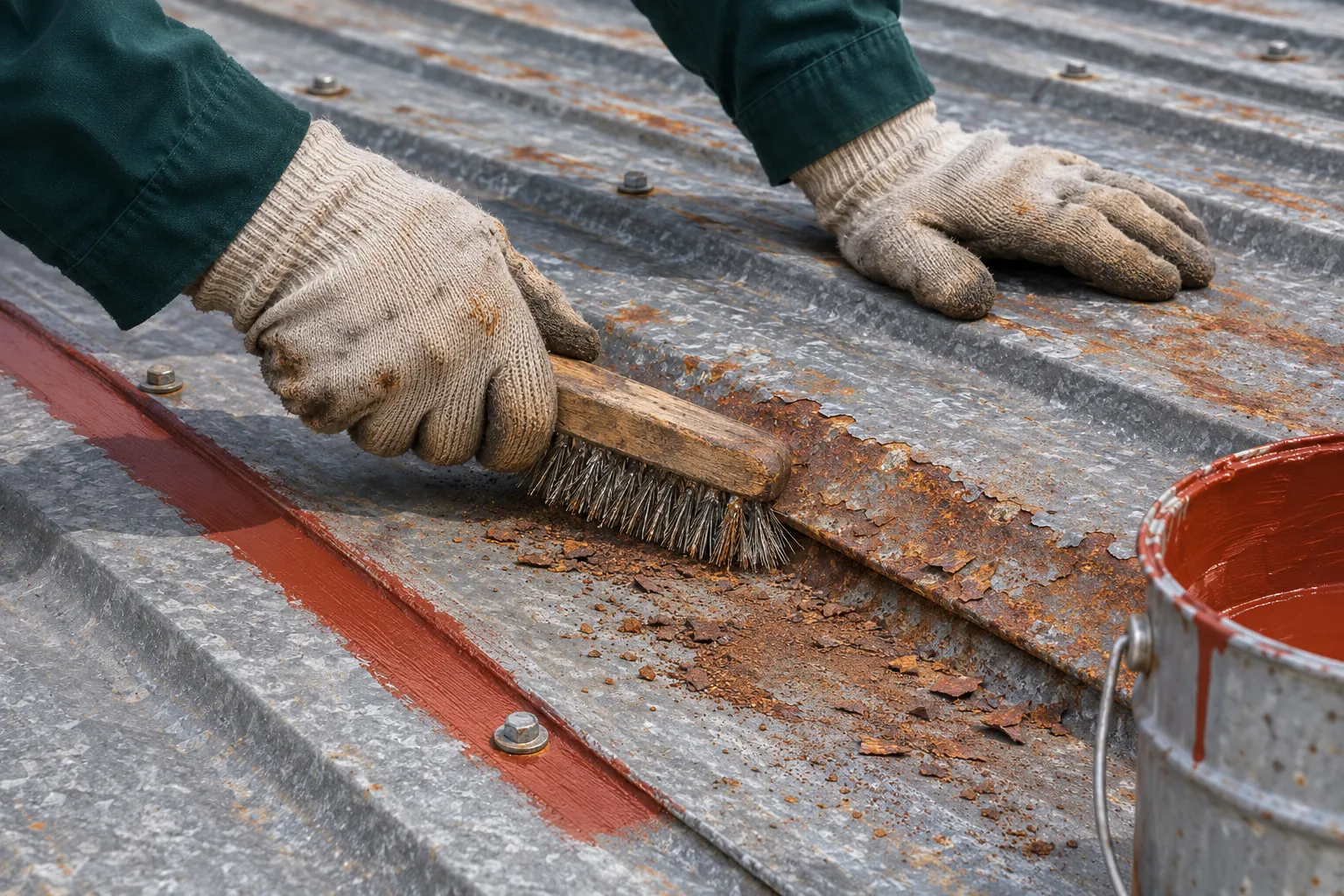
Rib tops take the most sun, so factory paint chalks there first. Washing removes the chalk, because acrylic laid over powder lifts with it.
As a Bethlehem acrylic roof coating contractor, we prime, reinforce, and coat pitched metal roofs with water-based acrylic during weather that lets it cure.
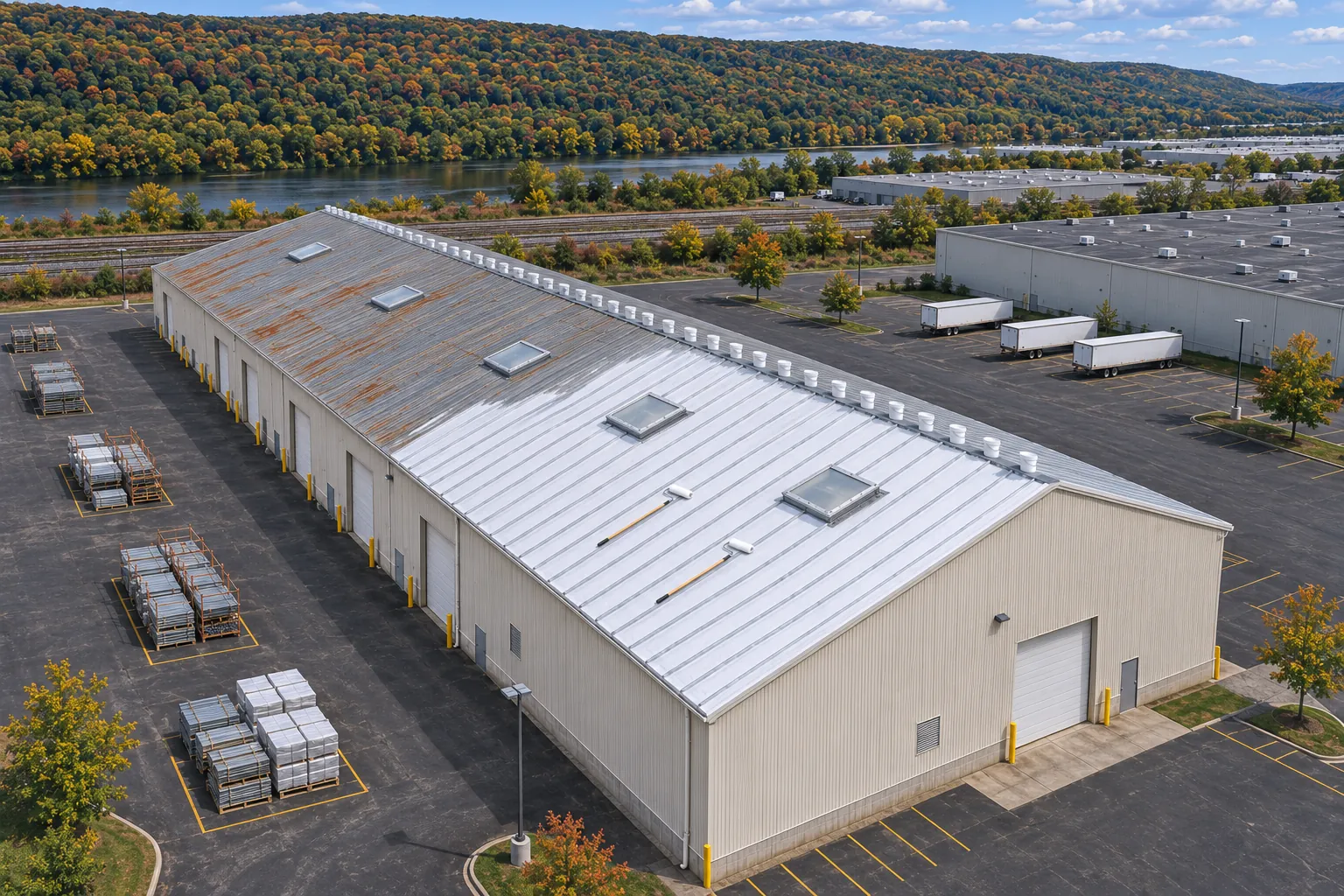
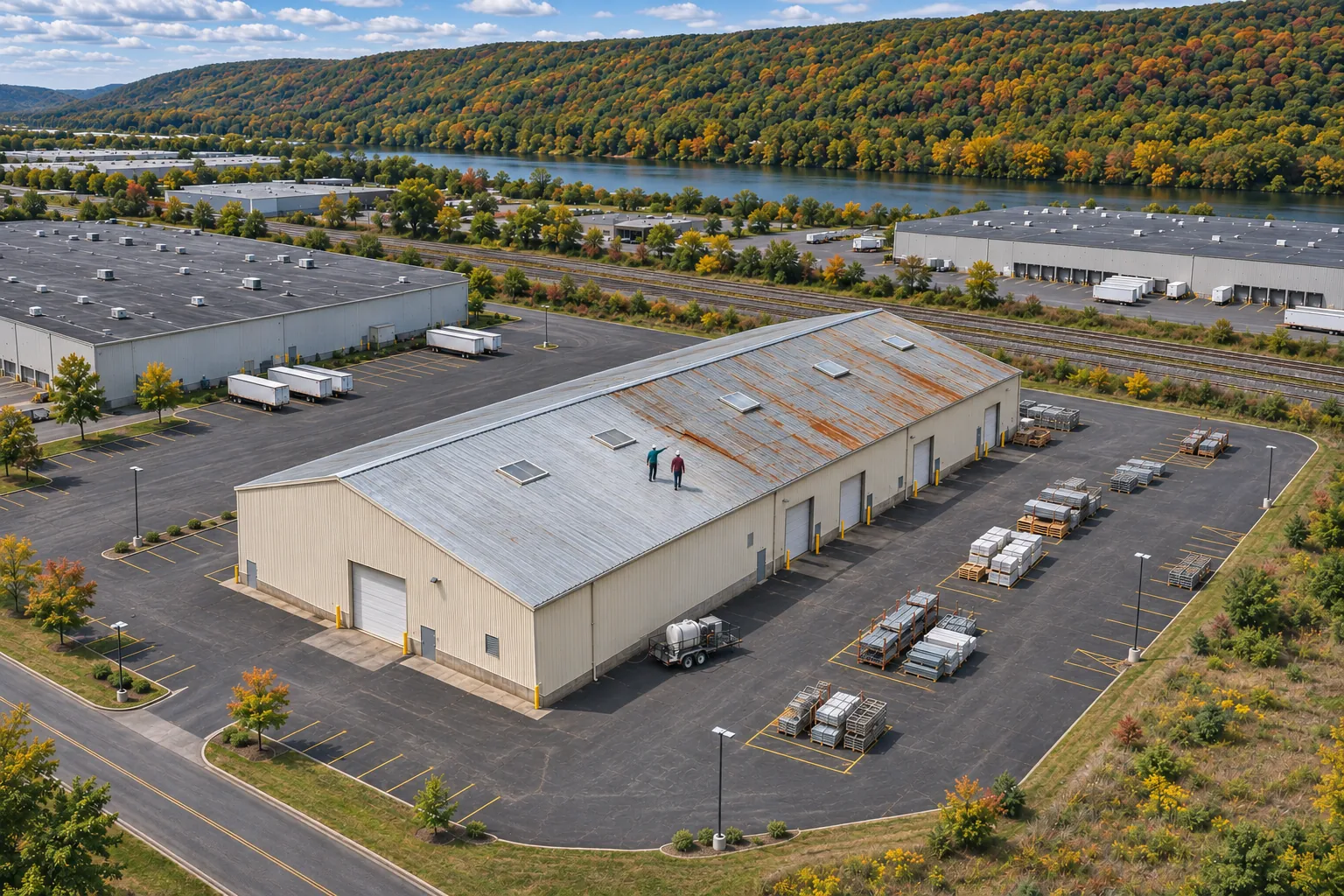
Bethlehem acrylic roof coating does its best work on roofs that drain fast and dry quickly. Match your roof to a row.
| What You See On The Roof | Acrylic After Prep | Repair, Then Acrylic | Pick Another System |
|---|---|---|---|
| Pitched ribbed steel with chalky paint | Usually fits | Sometimes | Rarely |
| Standing-seam panels with loose clips | Sometimes | Usually fits | Rarely |
| Low-slope section where puddles last a day | Rarely | Sometimes | Usually fits |
| Old acrylic coating worn thin but still stuck | Usually fits | Sometimes | Rarely |
| Existing silicone coating on the roof | Rarely | Rarely | Usually fits |
Acrylic sticks to clean, primed, dry metal. These five areas get prepared before it goes on.
Rib tops take the most sun, so factory paint chalks there first. Washing removes the chalk, because acrylic laid over powder lifts with it.
Laps move with every temperature swing. Polyester fabric embedded in base coat over each lap lets the acrylic stretch without splitting.
Rust rings around screw heads mean the washer has failed. Heads are cleaned, primed, and covered with a dab of base coat before the field coat.
Valleys and the strip above gutters stay wet longest. Any spot where water sits past a day gets reshaped, rerouted, or switched to a ponding-rated product.
Shaded panels stay cold and damp after sunny ones have dried. We check those surfaces separately before each pass, morning and afternoon.
Acrylic systems differ in primer, reinforcement, and the number of coats. These four cover most pitched metal roofs.
A rust-inhibiting primer, a base coat, and a topcoat in a contrasting tint, so full coverage is easy to see on the second pass.
Fabric at laps, curbs, and penetrations, plus an extra field coat, for older roofs with many repairs or heavy panel movement.
Where the old acrylic is clean and still stuck, a wash and one or two fresh coats bring the film back to thickness.
Some acrylics are made to resist early rain and cool nights. We use them for spring and fall jobs when the label limits allow.
Acrylic is the common choice for pitched steel in the Lehigh Valley. These are the reasons owners pick it.
Acrylic recoats with acrylic after a wash, so maintenance years from now is a lighter job than starting over with a new system.
A bright acrylic finish reflects much of the summer sun that weathered steel absorbs, keeping space under the deck cooler.
Water-based acrylic gives off little smell, which matters next to offices, medical suites, and air intakes.
Some moisture vapor passes through acrylic, which helps on metal buildings where a little condensation forms under the panels.
Call or start a ballpark estimate. Spring and fall slots fill around the weather, so an early inspection helps planning.
Get A Free Ballpark EstimateAcrylic depends on drying weather, so each step is timed to it.
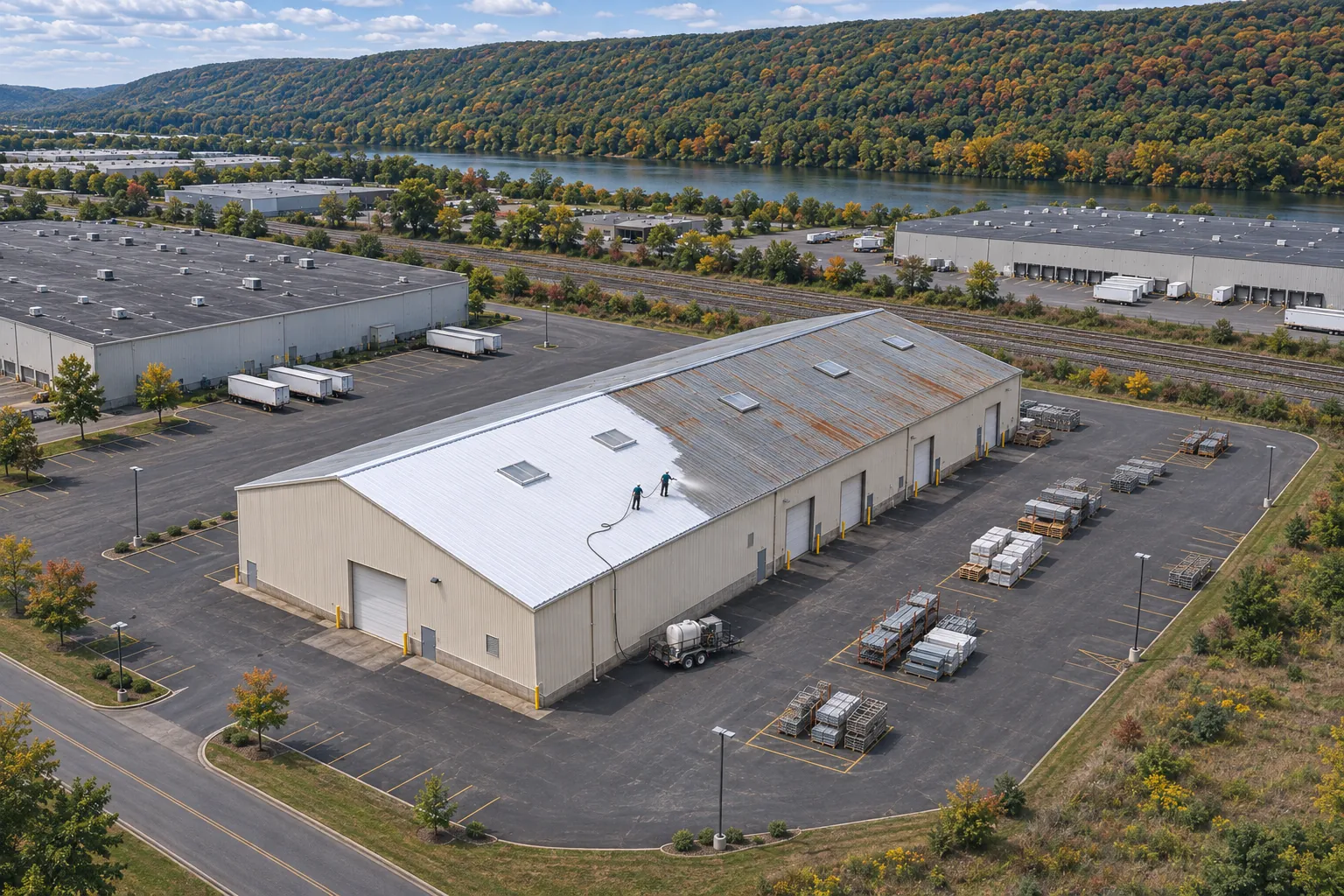
Panels, laps, screws, and any old coating get checked, along with where water runs and where shade keeps metal damp after sunrise.
Screws are replaced or sealed, laps get fabric, and loose trim is fastened. Spots that hold water are corrected or set aside for another product.
Chalk and dirt come off with a pressure wash. After drying, rust spots and bare steel get primer matched to the acrylic.
Base and topcoats go on only when air and steel temperatures stay inside the label limits through drying, with no rain or dew expected.
Roofs that hold water or need insulation often suit one of these instead.
The full steel job: rust treatment, laps, screws, and coating.
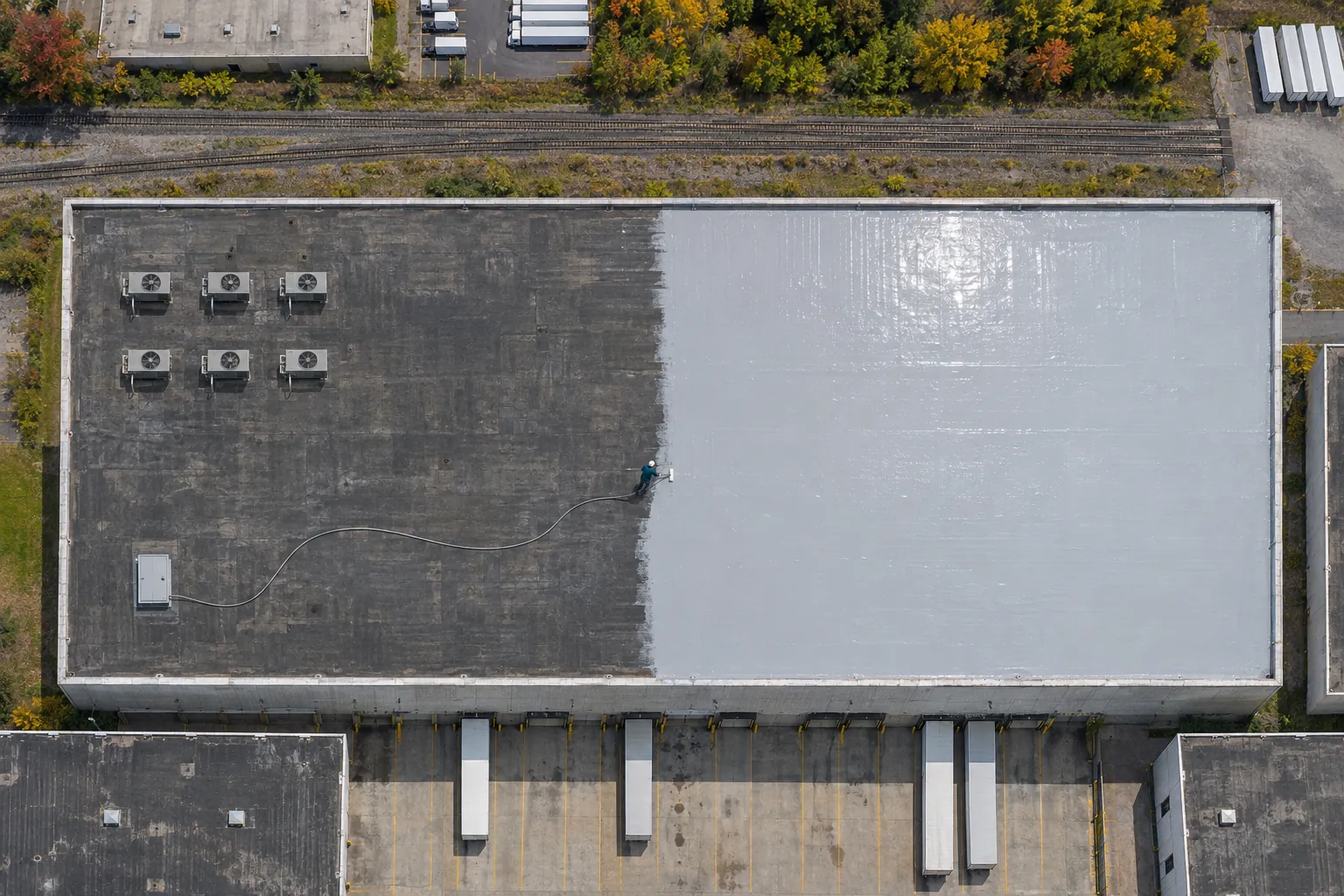
Roof areas that hold water for more than a day.
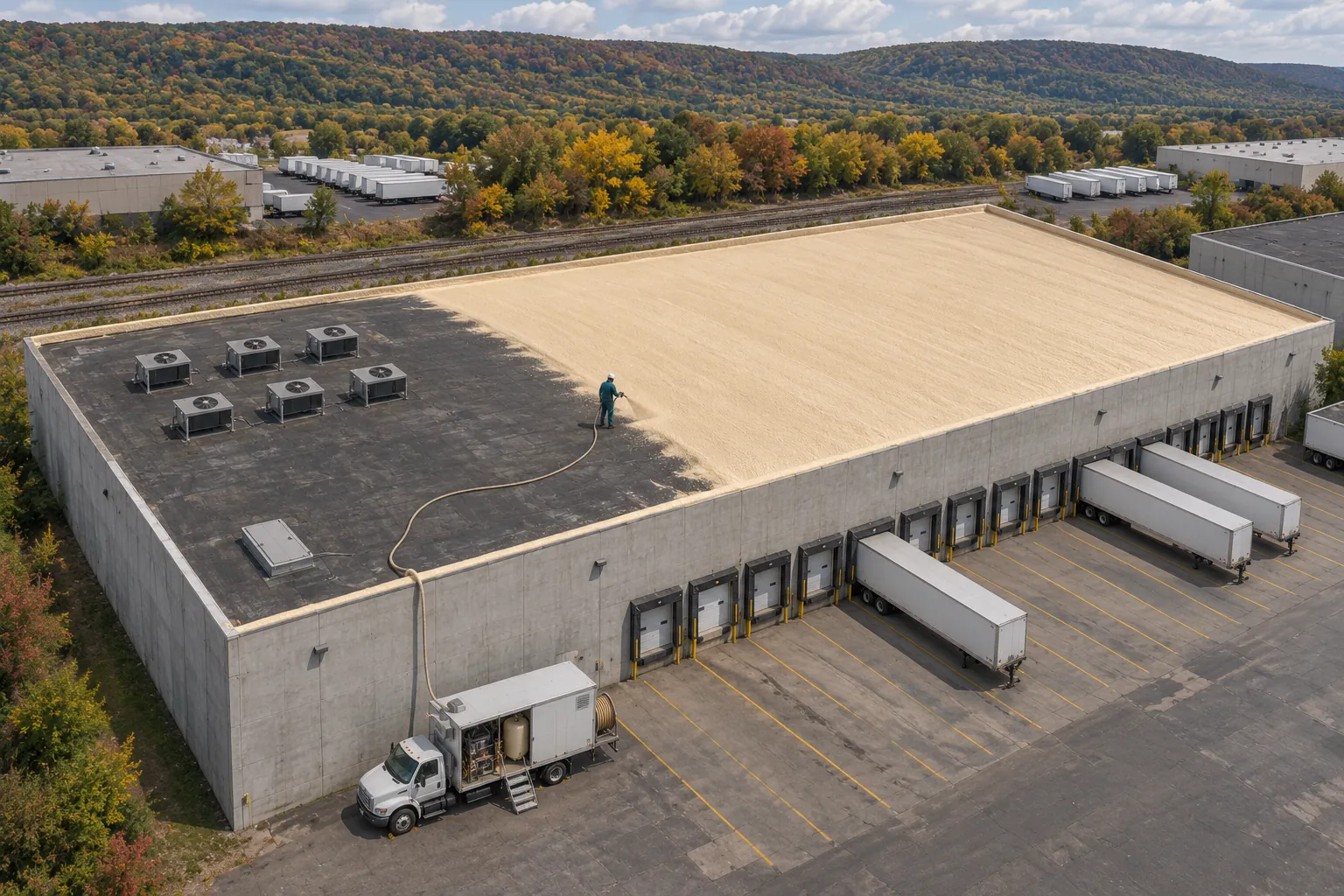
Insulation plus waterproofing on dry, firmly attached roofs.
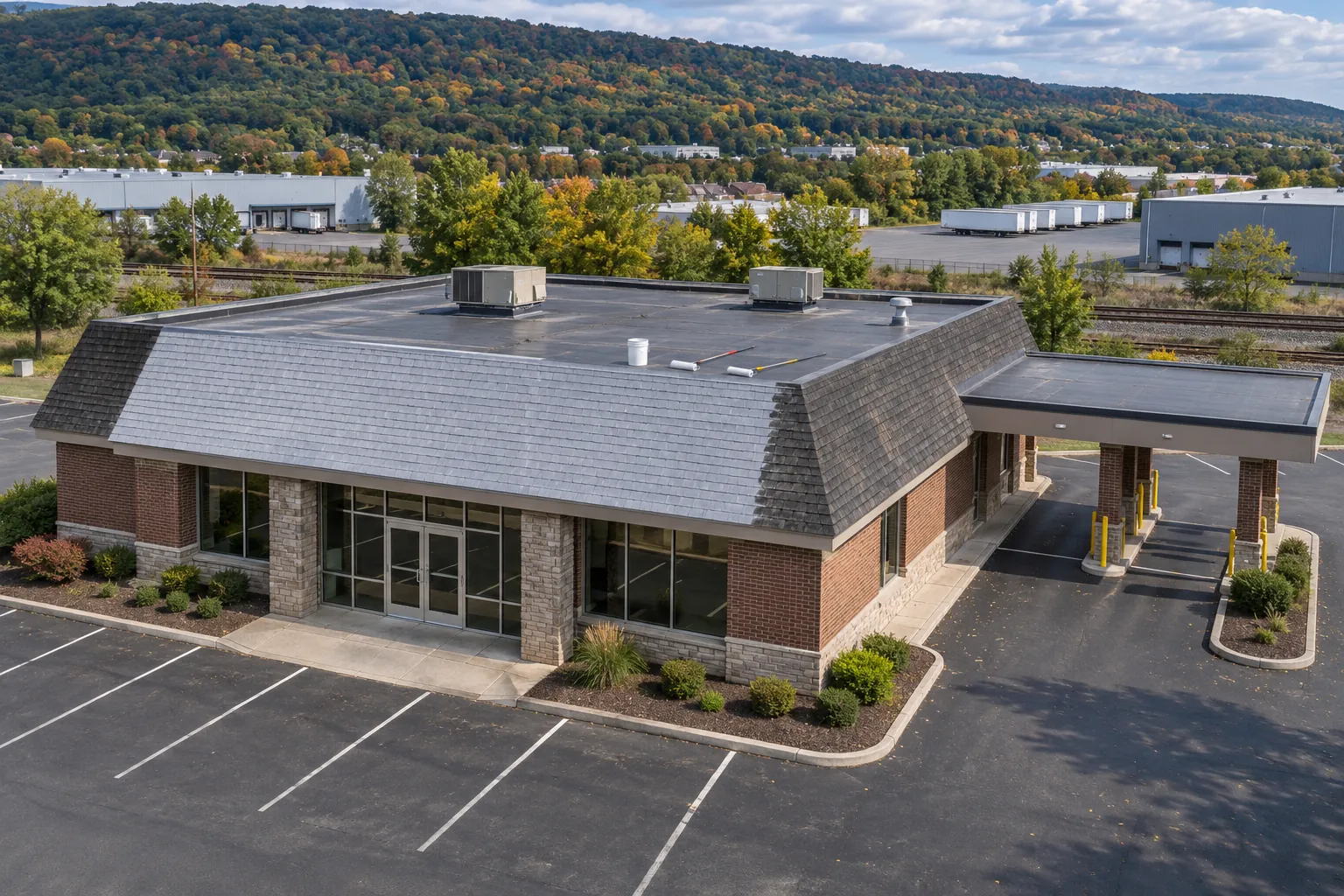
Commercial shingles that still lie flat and hold granules.
Answers about acrylic on pitched commercial metal roofs.
Usually two, sometimes three. The count matters less than the dry film thickness the manufacturer specifies, so we plan passes to reach that number and check ribs, laps, and screw heads where coverage runs thin. Older roofs with many repairs often get a third coat or fabric at details.
Yes, once the rust is treated. Surface rust is brushed down and primed with a rust-inhibiting primer, and the acrylic goes over that. Rust that has holed the panel needs metal repair first. Acrylic over untreated rust lets the corrosion keep working under the film.
Acrylic roof coating cure time runs from hours to days, set by temperature, humidity, shade, and film thickness. A coat can look dry in the sun while the layer underneath is still soft. We follow the product instructions under the actual conditions before allowing another pass or any roof traffic.
Each product lists minimum air and surface temperatures that must hold through drying as well as at application. In spring and fall around Bethlehem, cold nights and dew are the usual problem. We check overnight forecasts and the metal itself, and size each day so prepared sections can be coated and dried in that window.
Thickness is what keeps water out. Two thin coats can leave less protection than the specification calls for, especially on rib tops and screw heads. We take wet film readings as we roll or spray and inspect repaired areas closely, since coverage varies most there.
Send the roof size and pitch, or call, and we will plan the inspection around the weather.