Interior Drains
Strainers and Drain Bowls
Leaves and grit pack strainers on office roofs surrounded by trees. Bowls are cleared, clamping rings checked, and flow tested with a hose.
As a Doylestown metal roof coating contractor, we coat office and commercial metal roofs after tracing why water collects and fixing the outlets it should reach.
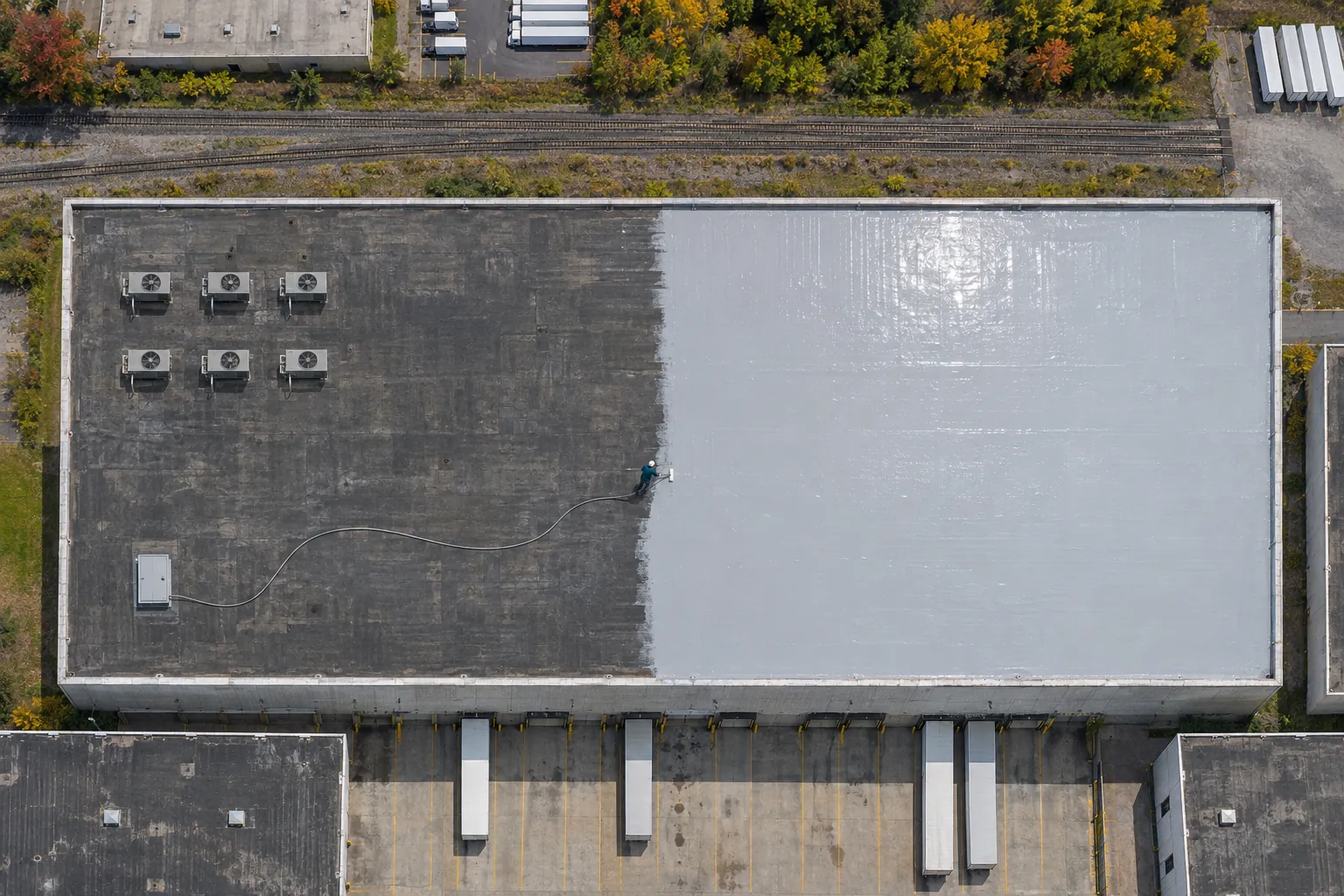
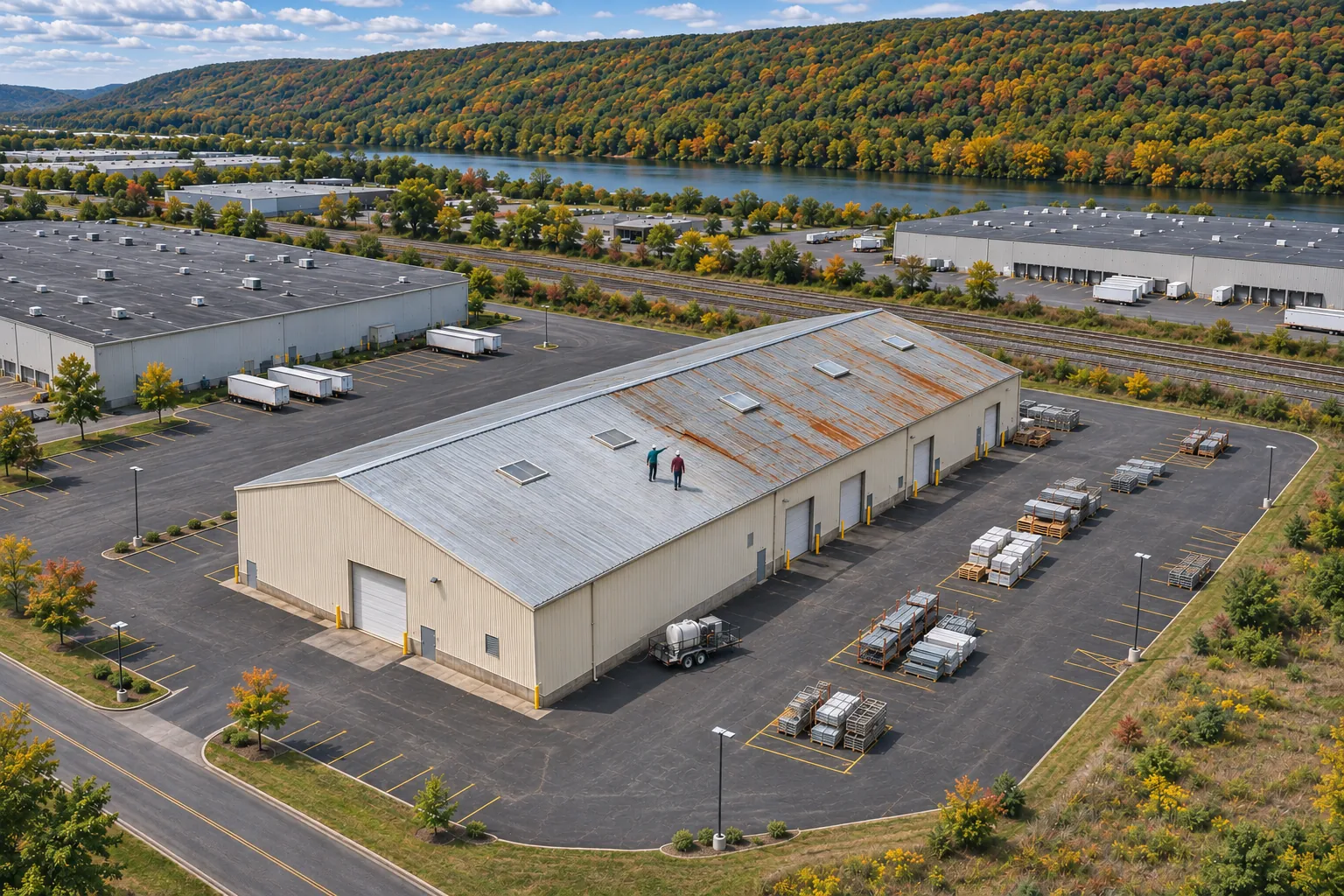
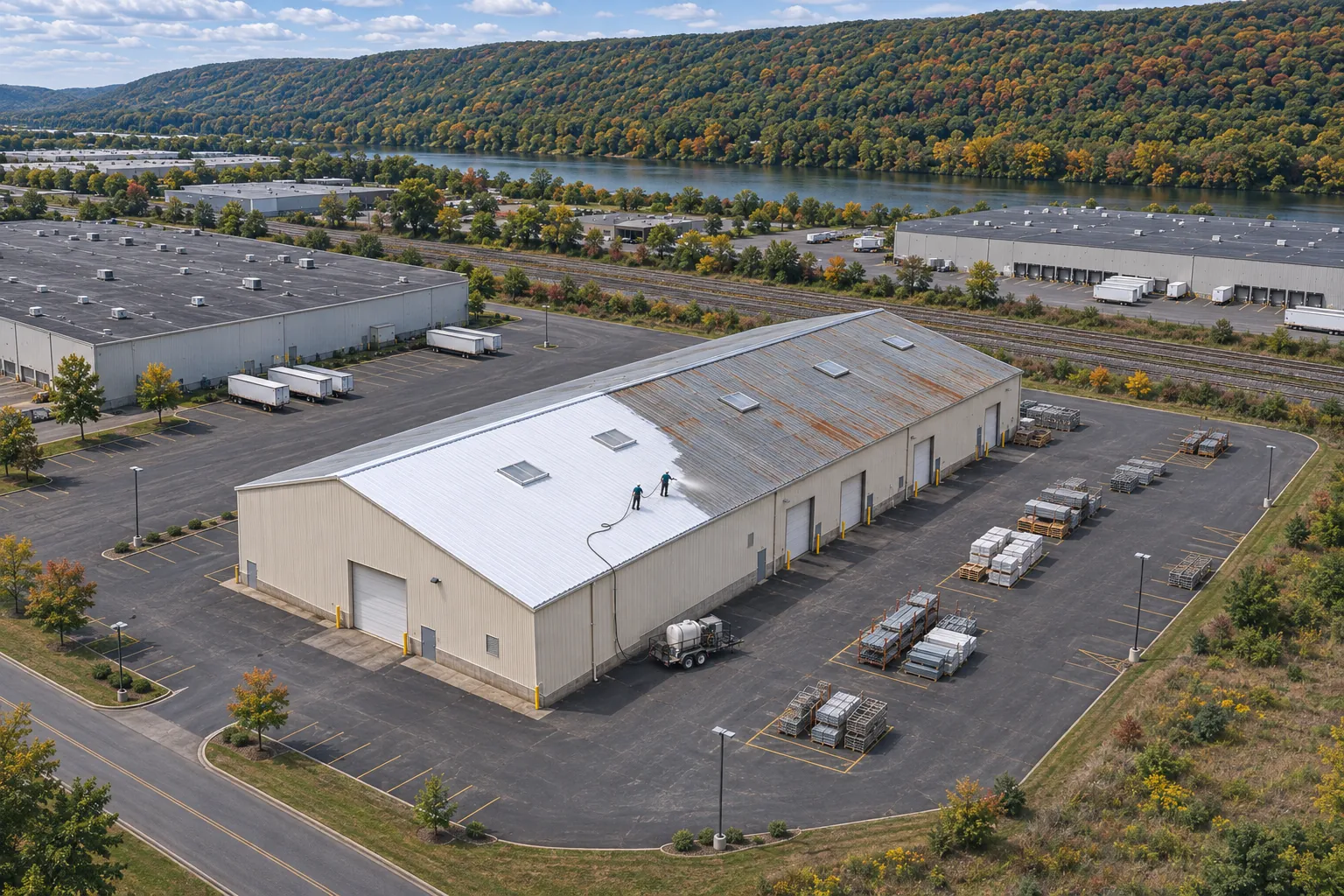
Doylestown metal roof coating on office buildings starts with drainage. Water that sits in low spots behind a parapet or near a slow outlet finds every weak lap, and the coating choice rests on what we find.
Drainage fixes and moisture repairs are listed as their own items, apart from the coating, so you can see what each one solves.
Water on an office roof travels through five places. Each gets checked before the coating plan.
Leaves and grit pack strainers on office roofs surrounded by trees. Bowls are cleared, clamping rings checked, and flow tested with a hose.
A scupper set higher than the roof surface leaves a pond in front of it. Lowering it or adding outlets clears that water before coating.
Deflected deck sections hold water after every rain. We measure their depth and report causes that need structural review.
Long-standing water often soaks the insulation under it. Moisture readings and core cuts show what must be replaced.
Water against a parapet works into base flashing and coping joints. Those are resealed or rebuilt so the coating ends at a tight edge.
With drainage corrected, a coating protects an office roof that sheds water again.
A coating rated for ponding covers areas that still drain slowly after corrections, holding up where water lingers.
Rooftop work happens above normal office activity, with low-odor products near intakes, so tenants keep working.
Coating carried up and over base flashing closes the joint where parapet leaks usually start.
Once wet sections are replaced and drains work, the coating keeps rain out of the new insulation.
Office roofs in Doylestown usually take one of these four approaches.
Silicone after outlets and low spots are fixed, for sections where water still moves slowly after storms.
Acrylic on parts of the roof that drain freely, kept apart from flat areas behind the parapet.
New scuppers or small crickets behind units move water off the field before any coating is applied.
Spray foam built thicker in low areas to push water toward drains, then a protective coating.
Call or start a ballpark estimate. Photos taken the day after a storm help us find the low spots fast.
Get A Free Ballpark EstimateDrainage gets solved before coating, and the steps run in this order.
We trace water from each low spot to its outlet, check strainers and scuppers, and take moisture readings under ponding rings.
Outlets are cleared or added, crickets built where needed, and deck problems reported for review. Wet insulation is cut out and replaced.
Panels and membranes are washed, laps and seams reinforced, and primer applied where the coating calls for it.
Ponding-rated coating goes on flat sections and a standard coating on pitched ones, with thickness checked at drains and parapet edges.
Doylestown is one of six places where we coat commercial metal roofs. Need work somewhere else? call us or send us a message.
Answers for office and commercial owners.
Low spots need a drainage assessment before the coating is chosen. We look at outlets, debris, and the shape of the supporting deck to learn why water stays. The coating then has to match the conditions that remain, and drainage corrections and moisture repairs are handled as separate parts of the work.
Plan around about $2.50 to $4.00 per square foot for coating, with replacement at about $5 to $8. Drainage corrections, wet insulation, and parapet flashing are priced as their own lines, and on office roofs they often decide where the total lands.
Yes. Doylestown is part of our service area, and smaller office roofs get the same drainage tracing and inspection as large ones. Start with a call or a ballpark estimate and we will arrange a visit that works around your tenants.
Most work is quiet roof walking, washing, and rolling. Pressure washing and any spraying make some noise, and odor is kept away from intakes by timing that work and choosing low-odor products near them. Tenants get a schedule before work starts.
They do. New or rebuilt scuppers are sealed to the parapet and coated with the field, so water leaves along a tight path. Crickets built behind units get the same coating, with extra thickness where water turns toward the outlet.
No coating changes the shape of the deck. Sag that holds water points to a structural question for a qualified reviewer. Shallow low spots can be handled with added outlets, crickets, or foam built up for slope, and the coating goes over the corrected surface.
Send photos of the standing water and the address, or call to set up the visit.