Purlin Lines
Screws That No Longer Grip
A screw that turns freely has stripped the purlin, or the hole has widened. Oversized screws or added fasteners restore the grip before sealing.
As a Hatboro metal roof coating contractor, we tighten or replace loose screws on shop and equipment buildings, repair the holes around them, and coat the roof.
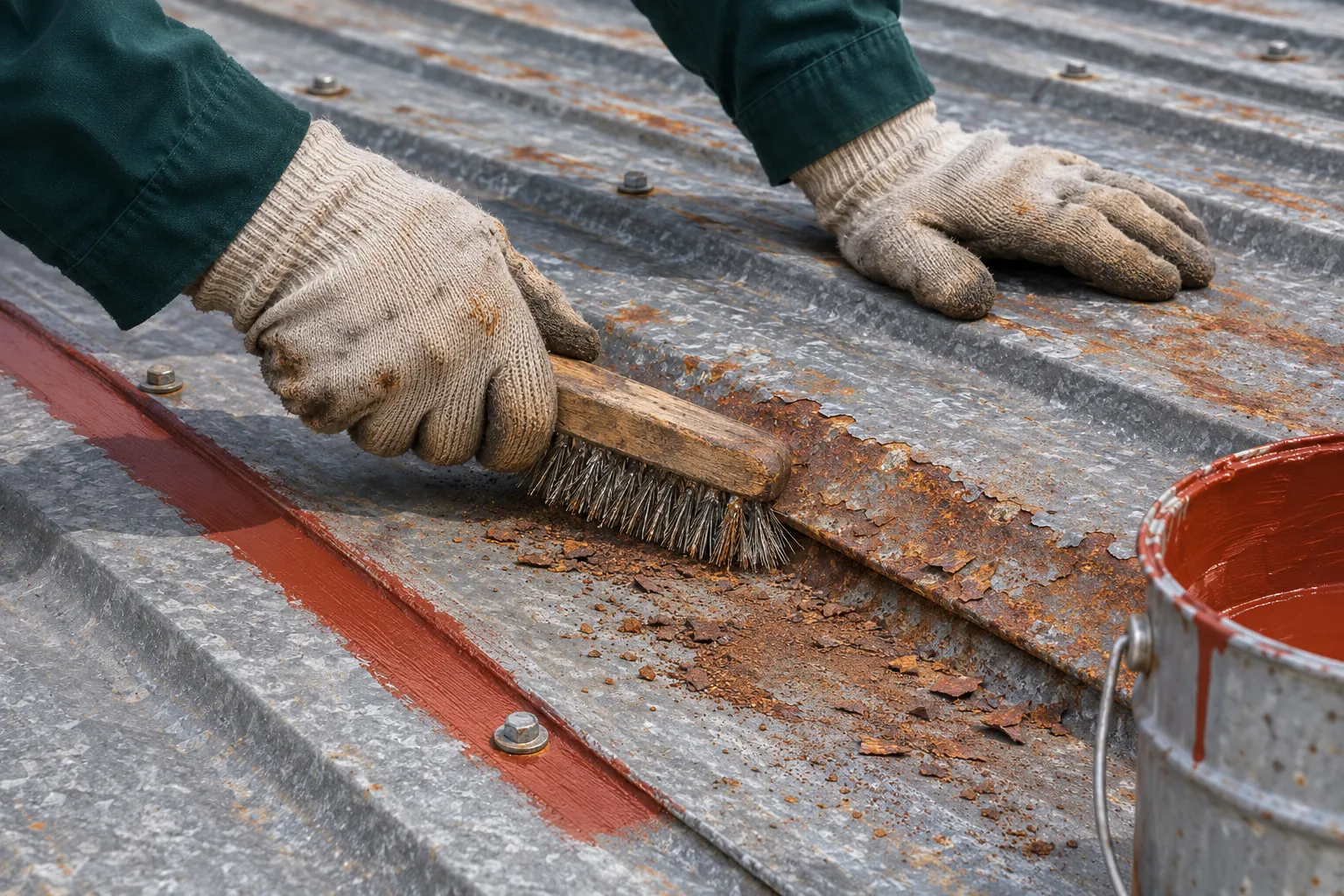
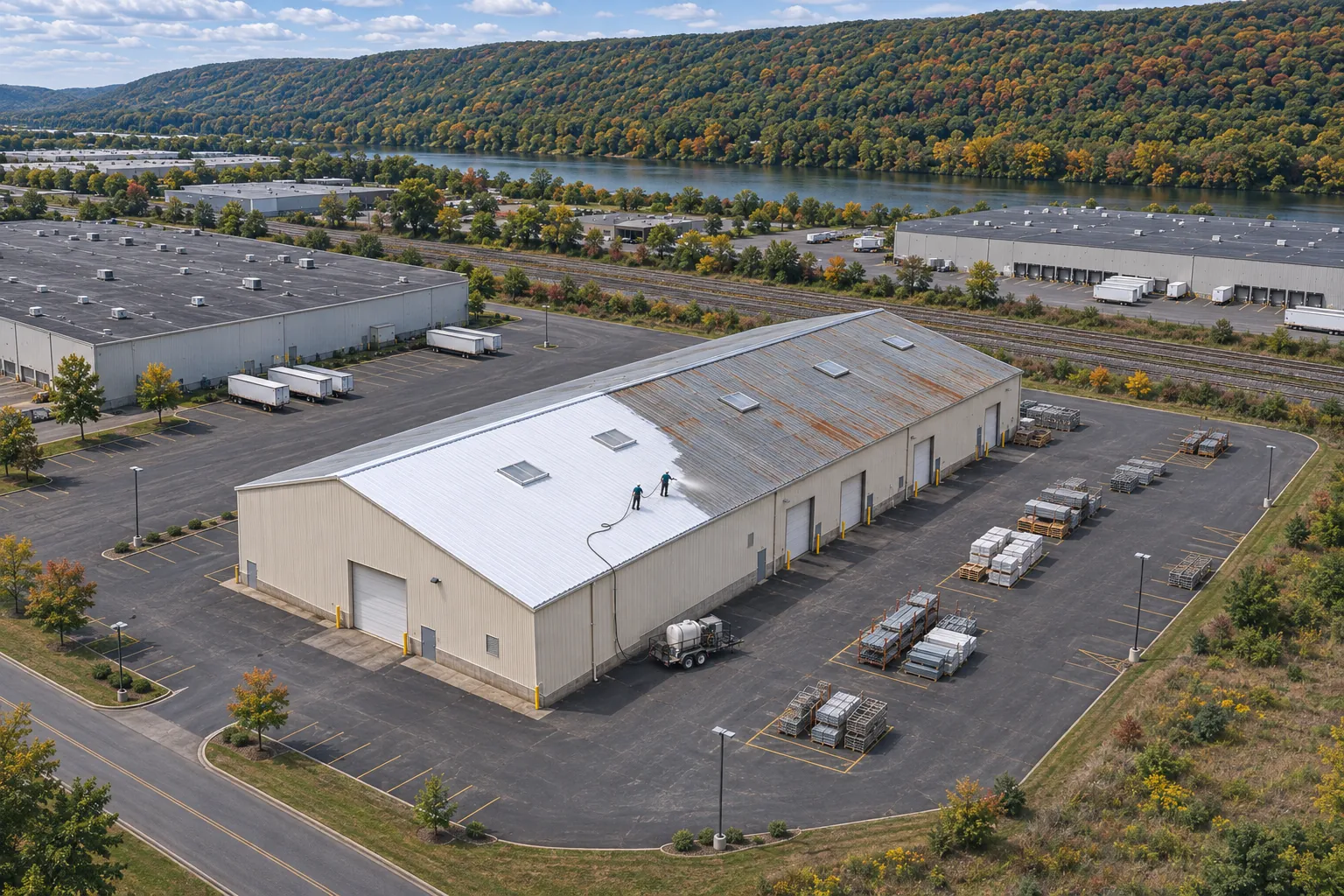
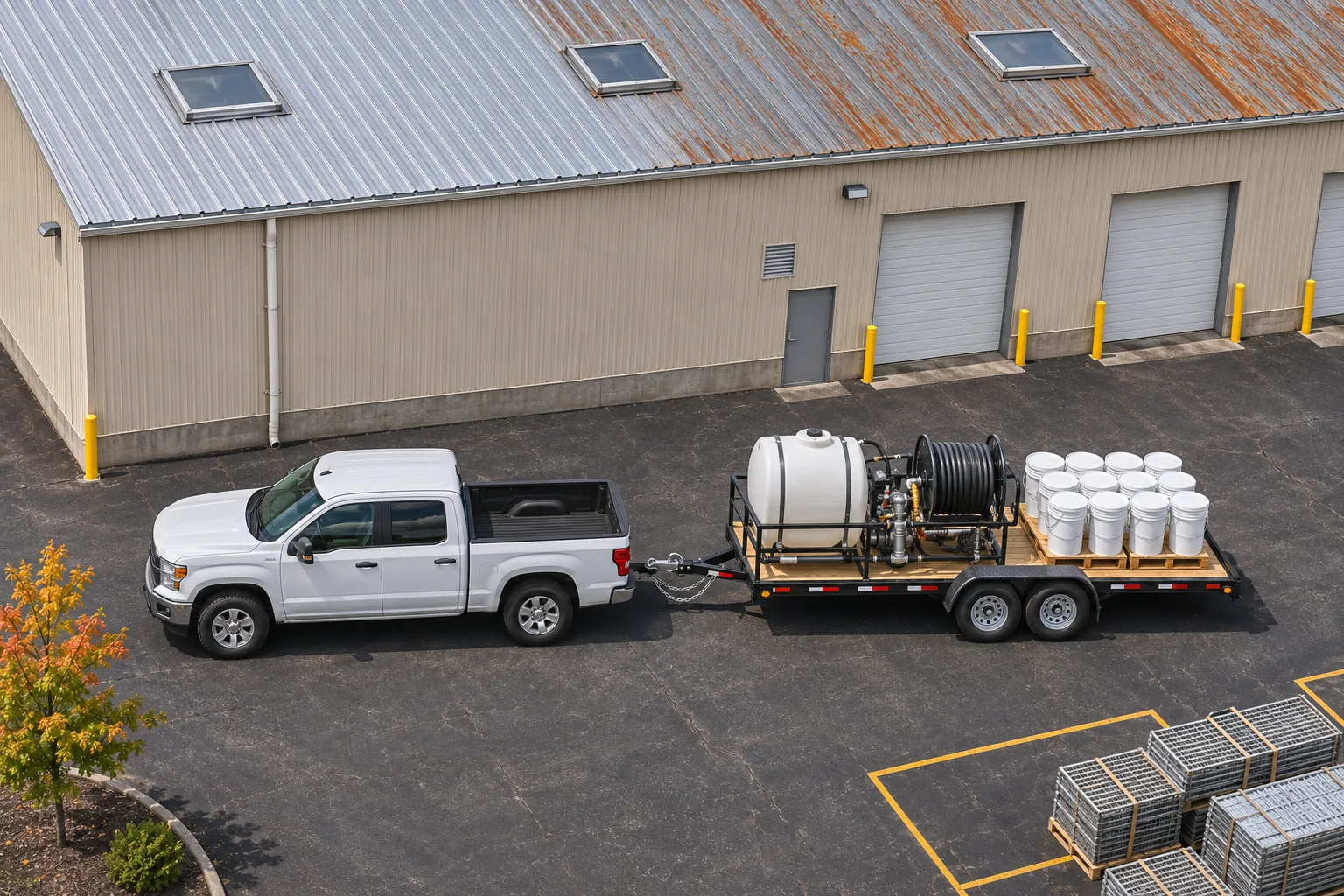
Hatboro metal roof coating jobs on shop and equipment buildings usually trace back to fasteners. Screws loosen as panels expand and shrink, holes grow oval, and water follows the screw shank into the building.
A sealed head on a screw that still moves breaks the coating around it within a season, so the connection gets fixed before anything covers it.
Equipment buildings take vibration and heavy service traffic. These zones get the closest look.
A screw that turns freely has stripped the purlin, or the hole has widened. Oversized screws or added fasteners restore the grip before sealing.
Panel movement wears holes into slots, and rust eats the edges. Small holes get patched with metal and sealant; heavily rusted areas get a new panel section.
Shop exhaust fans vibrate their curbs loose and leave residue on the panels. Curbs are refastened and flashed, and the residue is cleaned off before primer.
Missing foam closures let wind-driven rain in at the ridge and eave. Closures are replaced and ridge cap screws reset into solid steel.
Technicians walking to equipment flatten ribs and crack coatings. Walk paths get extra reinforcement so the coating holds up where boots land.
Once every connection is tight, a coating holds the repairs together. These are the gains on an equipment building.
Sealing screws that grip solid steel keeps the coating unbroken around each head, so the most common leak path stays closed.
Primed and coated hole edges stop rust from widening the slots further, which protects the panel around every fastener.
Reinforced coating along service routes takes foot traffic that would scuff a plain painted panel.
Work stays on top of the roof, so equipment bays and shop floors below keep operating through the job.
Fastener-heavy roofs in Hatboro usually take one of these builds.
Every screw checked, loose ones replaced with oversized fasteners, heads sealed, then a two-coat system over the field.
Polyester fabric embedded over each screw row adds strength where vibration keeps working at the fasteners.
Water-based acrylic over primer for pitched shop roofs that drain well and want easy recoats.
Where holes have rusted wide, new panel sections go in before the coating covers the whole roof.
Call or start a ballpark estimate. Note where the drips land inside, because that points us to the fastener lines that failed.
Get A Free Ballpark EstimateFastener work takes most of the time on these roofs, and coating comes last.
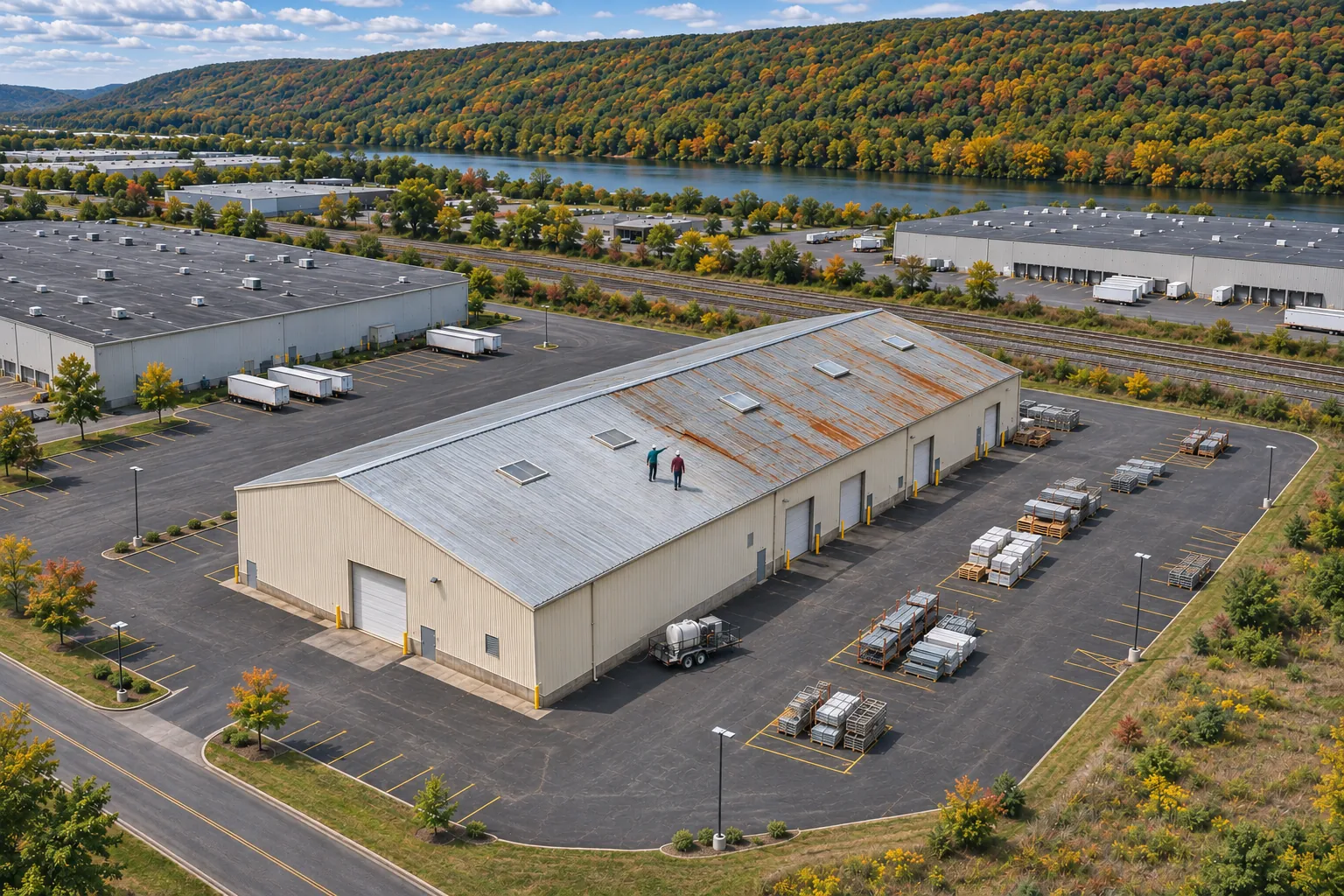
Each screw row is walked and tested by hand, holes are checked for size and rust, and curbs and closures are logged.
Loose screws come out and larger ones go in, worn holes are patched, and rusted panel sections are cut out and replaced.
Oil and exhaust residue near fans are scrubbed with a degreaser, then the roof is pressure washed and primed where rust shows.
Screw heads get a brush coat first, then the field coat goes on with fabric over the rows that see the most vibration.
Shops, plants, and offices in these towns are part of our coverage. If your building sits outside them, call us or send us a message.
Answers for shop and equipment building owners.
Because a hole that lets a screw move keeps leaking under a coating. Where screws are loose or leaks have shown up, we check whether the surrounding metal and purlin can take a repair. The connection gets restored first, and sealing and coating follow, so nothing covers a hole that still moves.
Fastener work is priced as part of the job. Our planning range for coating runs about $2.50 to $4.00 per square foot, and roofs with many failed screws or worn holes sit higher in it. The proposal lists fastener replacement separately so you can see that share.
Hatboro is on our service list, so start with a call or a ballpark estimate. We schedule the inspection after a short conversation about the building, its equipment, and when the shop is quietest. Roofs there get the full fastener check described on this town page.
Yes. Most steps happen with machines running below. Work right at exhaust fans waits for a shutdown window, since residue and heat interfere with primer and coating. We plan those windows with your maintenance staff before the job starts.
Oversized screws are made for that. They cut fresh threads in a worn hole and pull the panel tight again. Where the purlin itself is damaged, an extra fastener goes into solid steel nearby, and the old hole is patched and sealed.
Send the address and where the drips show up, or call to book the inspection.