
Drains And Scuppers
Outlets That Back Up
Leaves and ice slow interior drains and scuppers, and water spreads across the field. Strainers are cleared, broken outlets fixed, and flow checked before coating.
As a Bethlehem silicone roof coating contractor, we coat low-slope metal and membrane roofs after fixing drainage, seams, and wet insulation underneath.
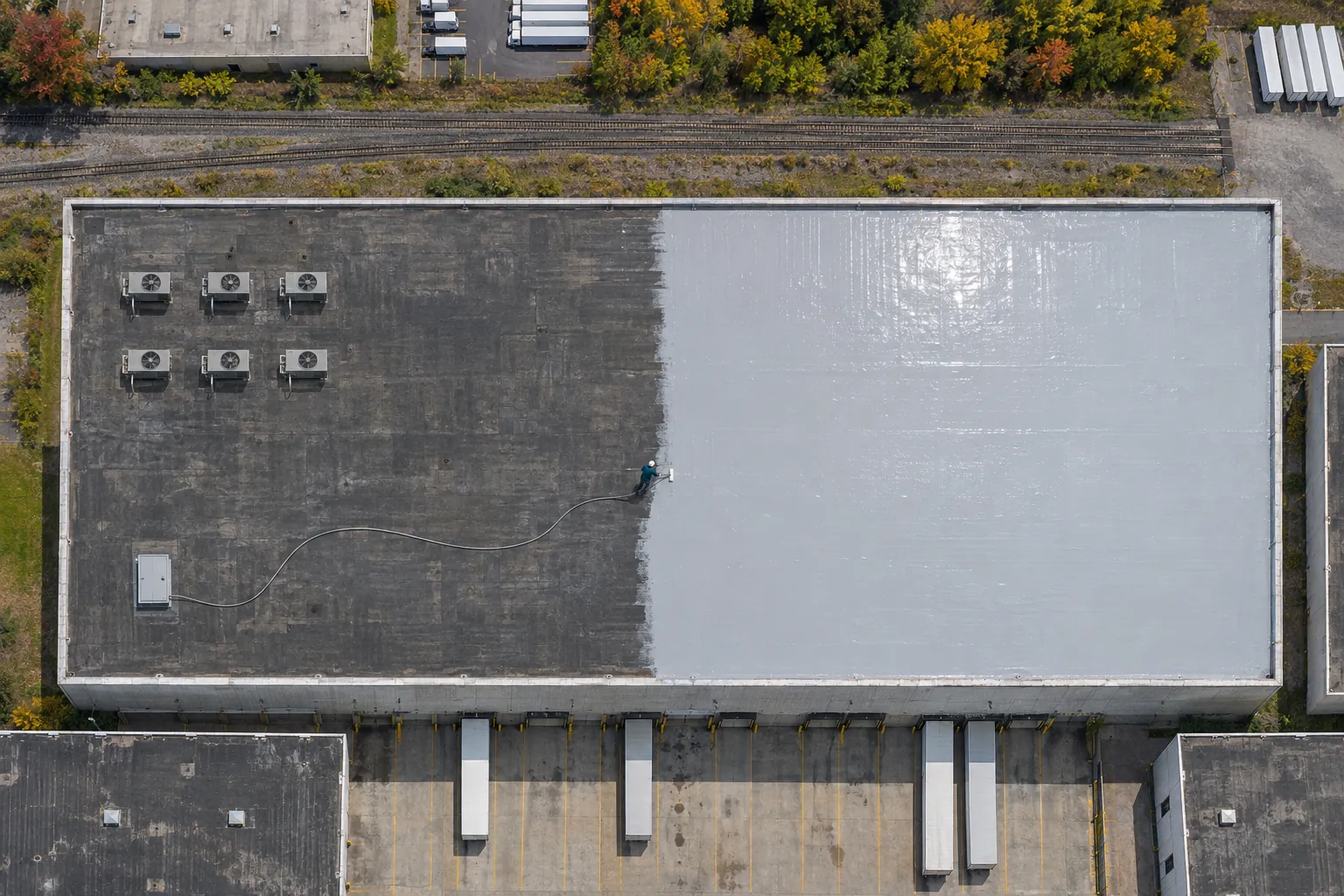
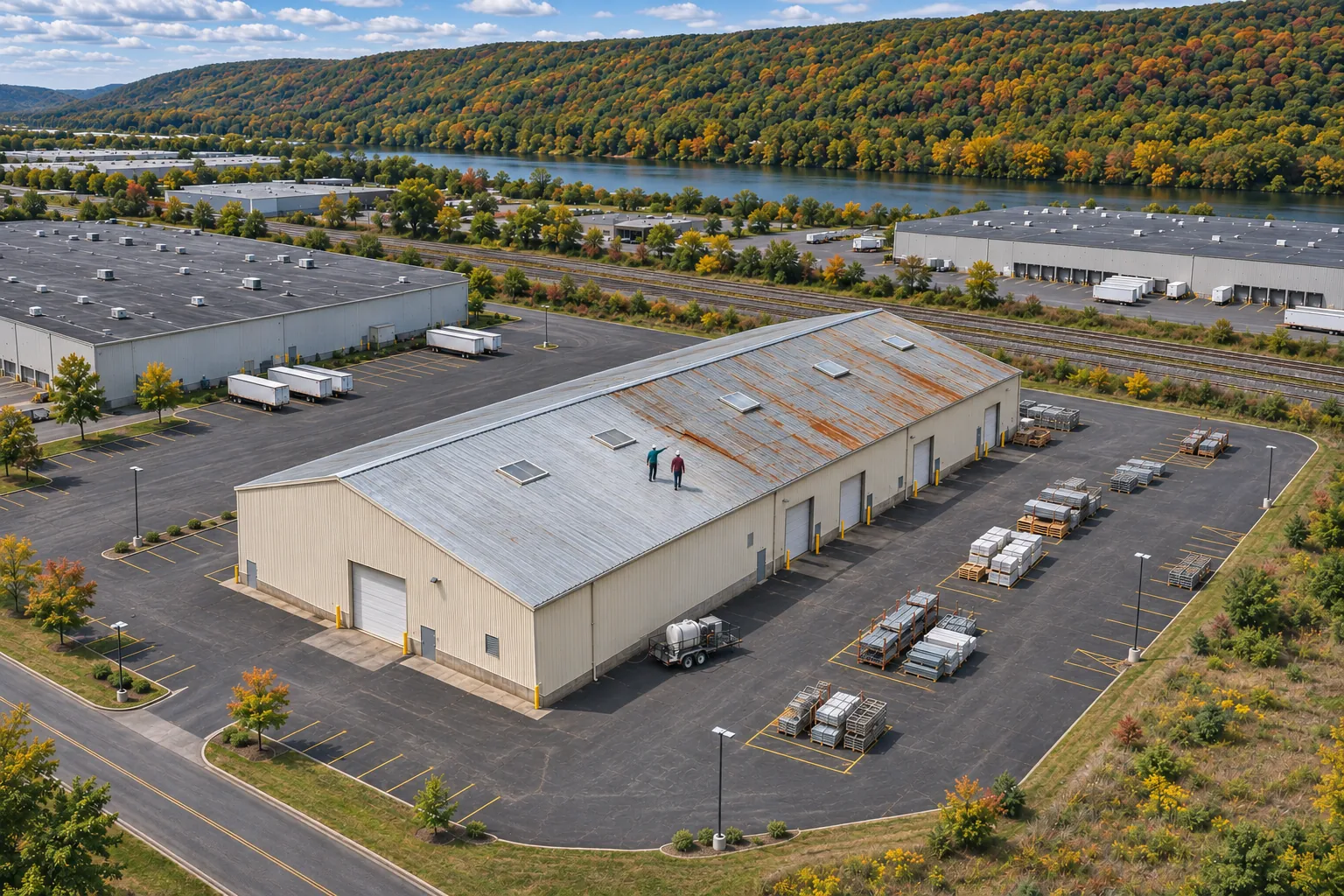
Bethlehem silicone roof coating fits low-slope roofs with dry insulation and working drains. Find your roof in a row below.
| What You See On The Roof | Silicone After Prep | Fix Drainage First | Different System |
|---|---|---|---|
| Low-slope metal with brief puddles after rain | Usually fits | Sometimes | Rarely |
| Water standing two days near a blocked drain | Sometimes | Usually fits | Rarely |
| Membrane roof with dry insulation and open seams | Usually fits | Sometimes | Rarely |
| Wet insulation found by core cuts | Rarely | Usually fits | Sometimes |
| Roof already coated with acrylic in good shape | Sometimes | Rarely | Usually fits |
Silicone goes over five areas that need attention first on a low-slope roof.
Leaves and ice slow interior drains and scuppers, and water spreads across the field. Strainers are cleared, broken outlets fixed, and flow checked before coating.
Dirt rings show where water sits after storms. Silicone tolerates it, yet deep or long-lasting ponds point to deck sag or blocked flow that we report and correct.
Membrane seams and metal laps get cleaned and reinforced with fabric or seam tape compatible with silicone, so the coating bridges a closed joint.
Soft spots and core cuts reveal wet insulation. Coating over it traps the water, so those sections are cut out and replaced first.
Silicone is carried up curbs and around stacks after loose flashing is fastened down. These details get extra thickness because foot traffic concentrates there.
Silicone jobs vary by what the coating goes over. These four builds cover most low-slope roofs.
Primed steel panels with sealed laps take one thick silicone pass or two passes, as the manufacturer sets for the slope and exposure.
TPO and EPDM membranes are cleaned, primed where the product calls for it, and coated after seams and flashing are repaired.
Granulated cap sheets take silicone well once loose granules are washed off and blisters are cut and patched.
Spray foam roofs often finish with silicone because it holds up where water sits. Recoating foam later with silicone keeps the system matched.
Silicone earns its place on roofs that drain slowly. Here is what it adds once the roof under it is ready.
Silicone resists ponding water better than acrylic, so slow-draining areas near outlets keep their protection between rains. The ponding cause still gets fixed.
Moisture-cure silicone stays rubbery through freeze-thaw cycles, moving with metal laps and membrane seams instead of cracking at them.
High-solids silicone builds thickness quickly, which shortens roof time on large warehouse and office roofs.
White silicone reflects summer sun. It picks up dirt over time, and a wash brings back most of the brightness.
Call or start a ballpark estimate. Photos of where water sits help us check the drains on the first visit.
Get A Free Ballpark EstimateSilicone needs a clean, dry, primed surface and mild cure conditions. These four steps get it there.
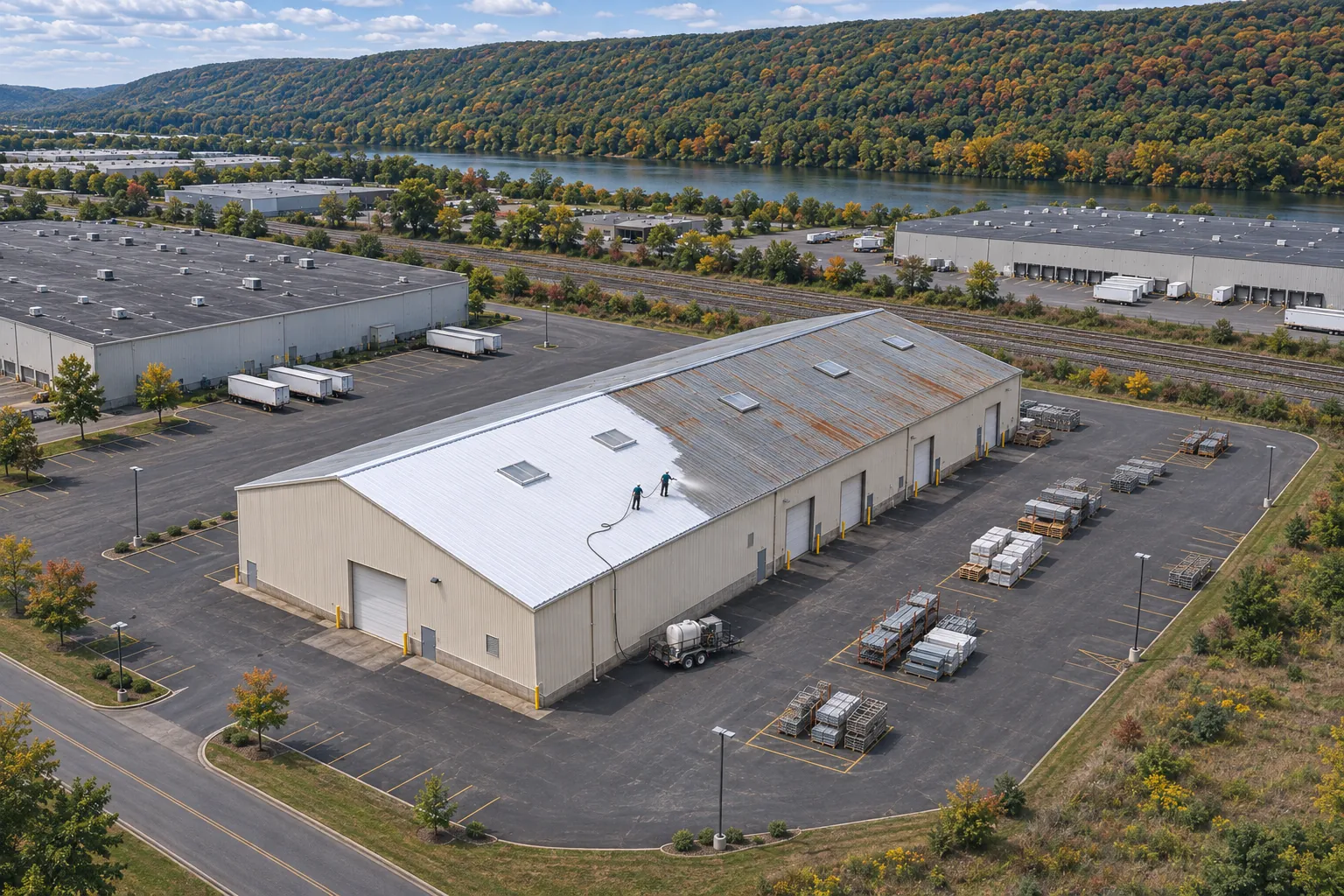
We map where water ponds, test insulation moisture, and check seams, curbs, and outlets. Existing coatings are tested for adhesion and type.
Clogged outlets are cleared, broken strainers replaced, and seams and laps reinforced. Wet insulation is removed and replaced.
The roof is pressure washed and left to dry. Primer goes on where the substrate needs it, such as aged membranes or painted metal.
Silicone goes on in one or two passes to the specified thickness, with extra at details. Dew and overnight cold are checked against the cure window first.
Some roofs or sections fit another system better than silicone.
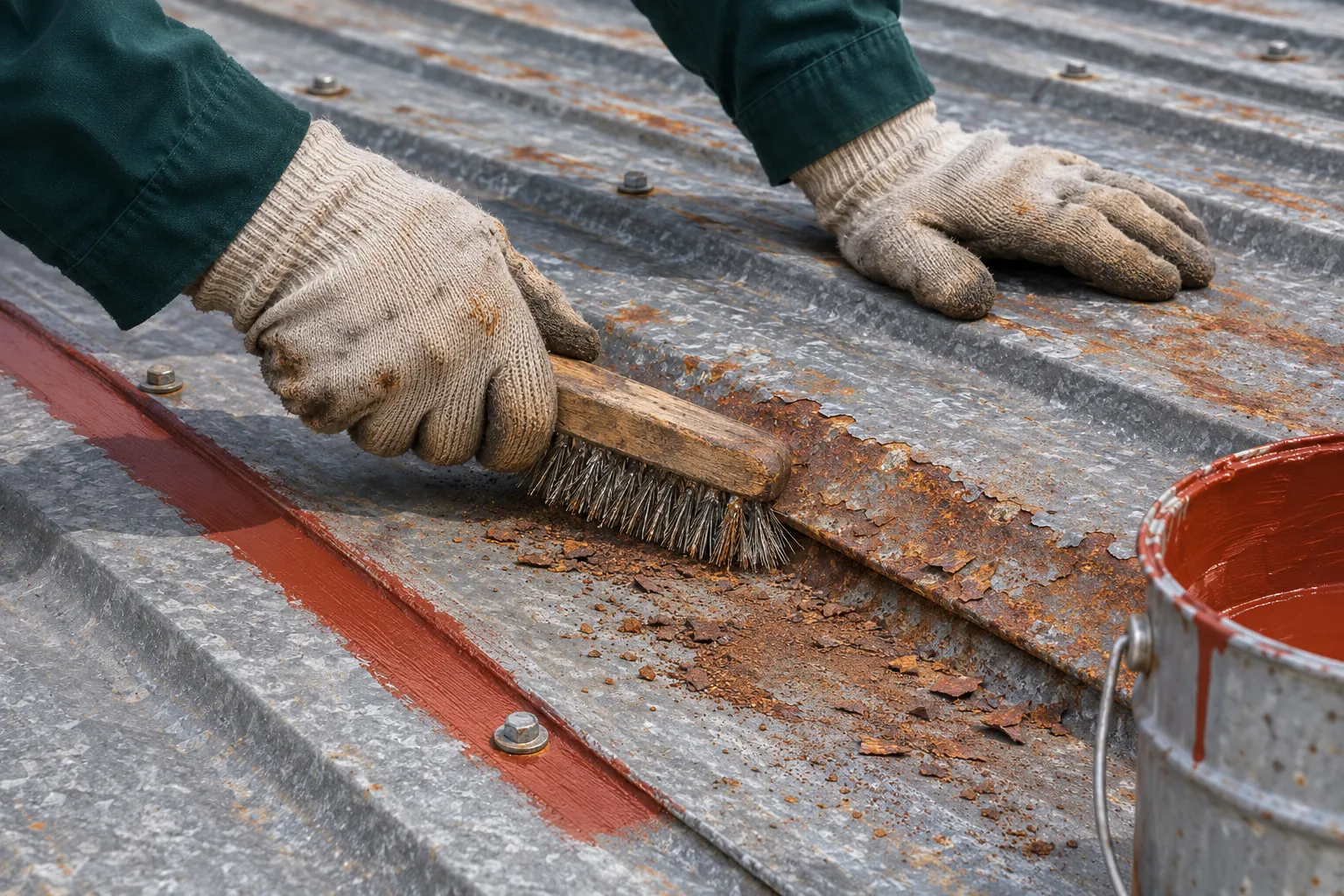
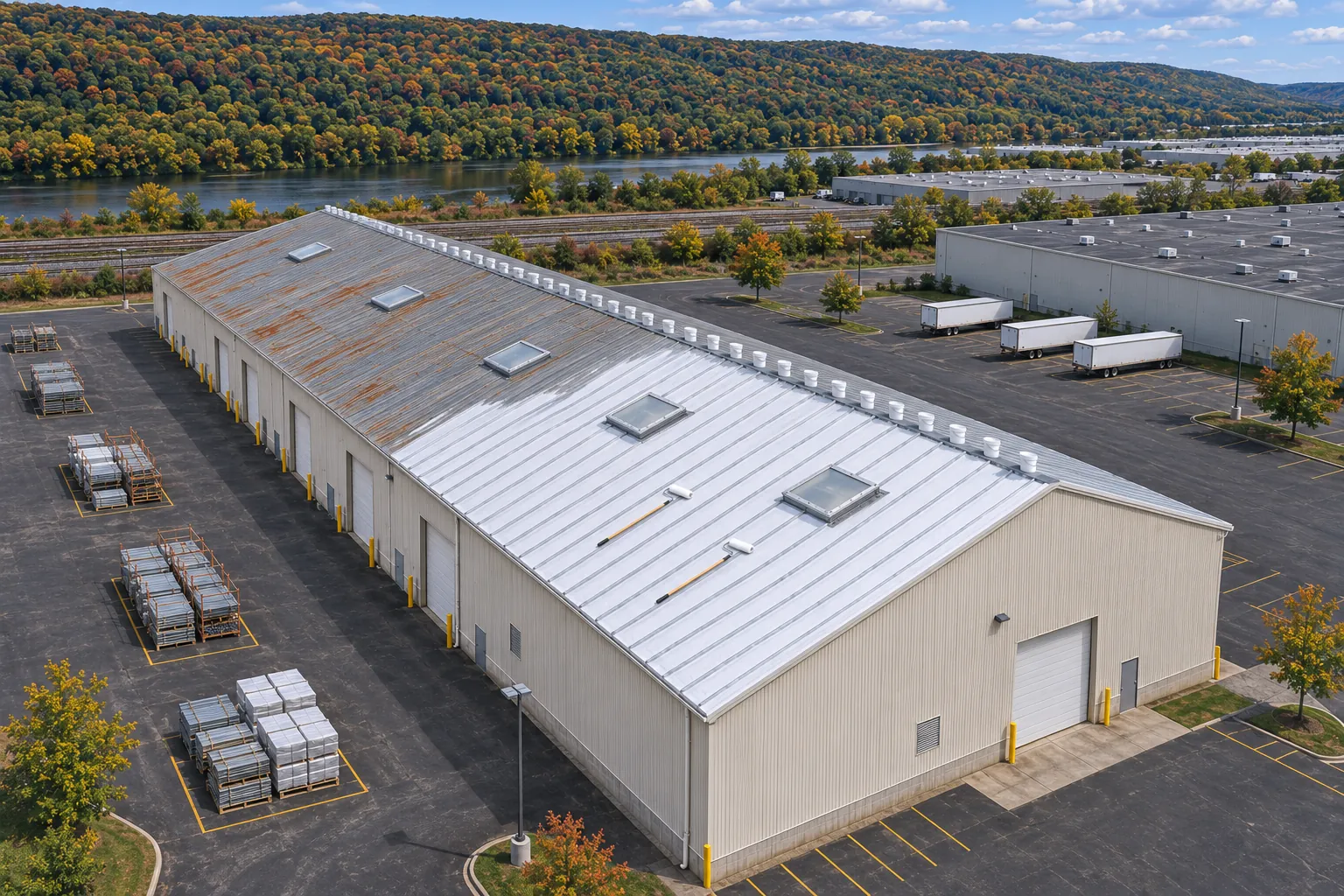
Exposed-fastener steel panels with rust, laps, and screw rows to treat.
Pitched roofs that shed water fast and want easy recoats.
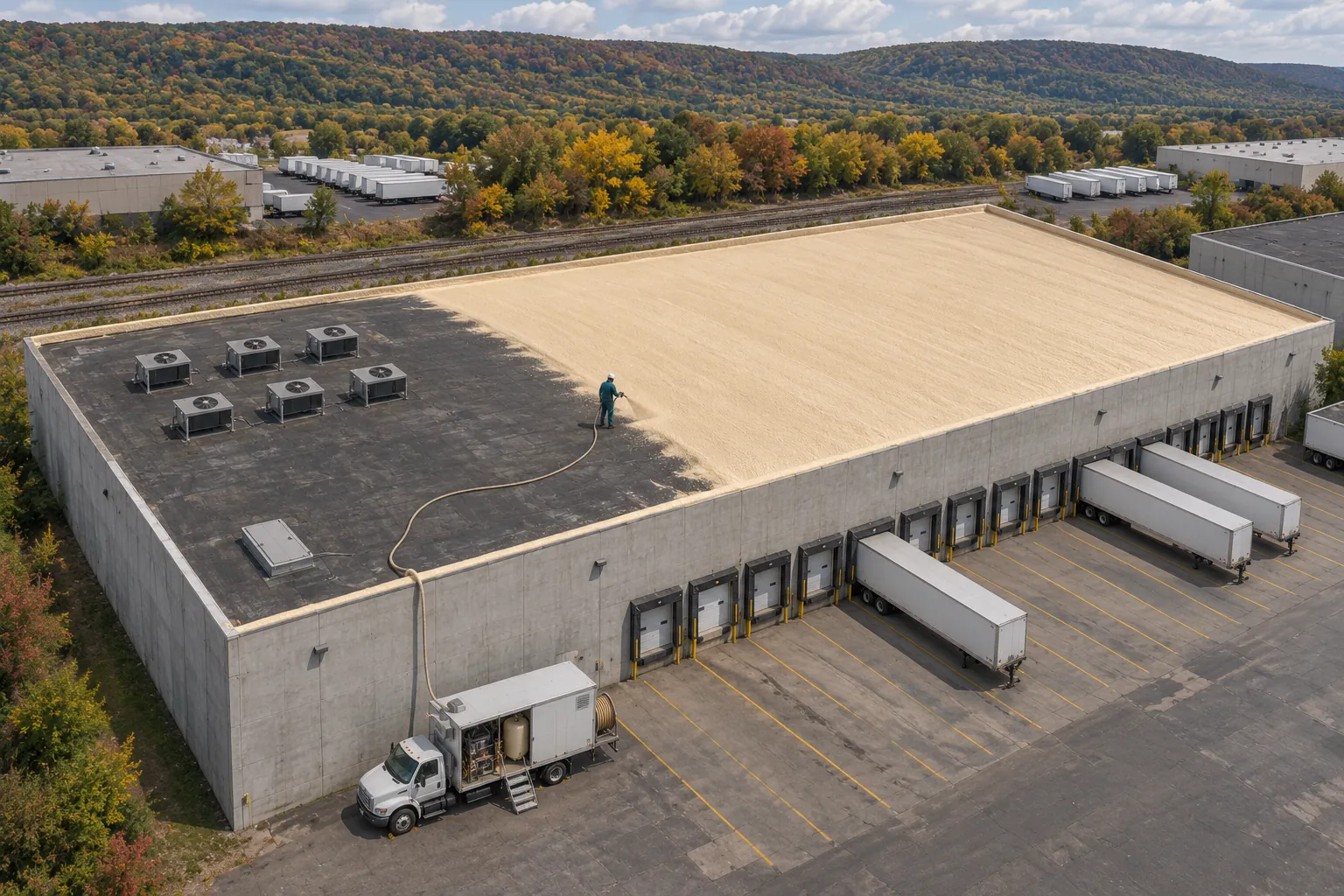
Adds insulation under a silicone or acrylic topcoat.
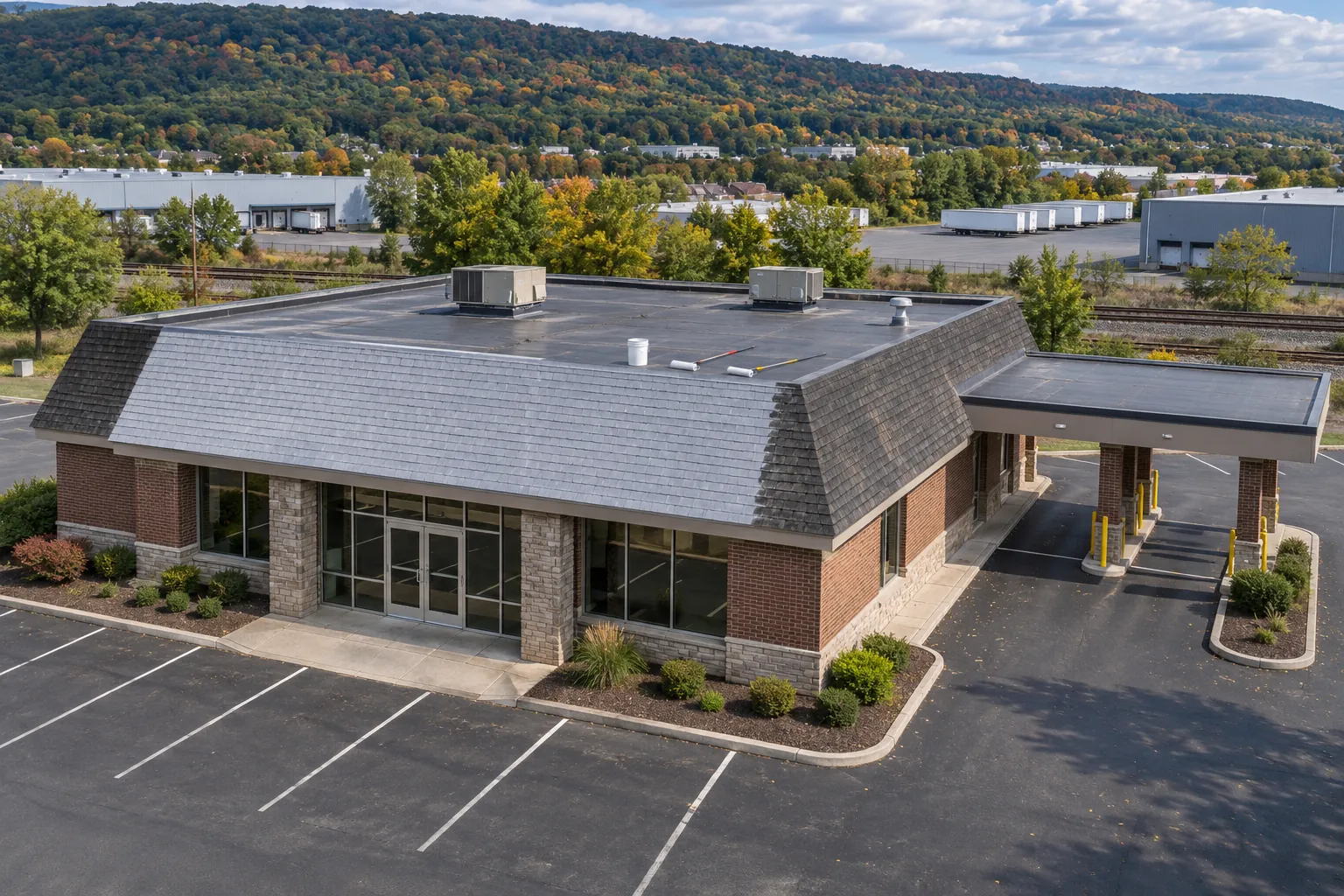
Asphalt shingle faces in good shape, with an approved product.
Direct answers about silicone on low-slope commercial roofs.
Slope and drainage usually decide. Silicone handles water that lingers and stays flexible in cold weather, while acrylic suits pitched roofs that drain fast and recoats more easily. Silicone also limits future recoats to silicone.
When acrylic is ruled out, silicone still has to match the roof itself, so we check that rather than assume it.
It does when the membrane is attached, the insulation is dry, and seams are repaired first. Aged membranes often need a primer for silicone to grip. Over wet insulation or a membrane pulling loose, coating only hides the problem, so core cuts and seam checks come before any price.
No. Silicone coating over ponding water resists the water, but it leaves the low spot and the blocked outlet where they were. We trace why water collects, clear or repair outlets, and report deck sag. The coating then protects a roof that drains as well as its structure allows.
Sometimes. Silicone roof coating in cold weather needs the steel or membrane free of frost and dew, and temperatures inside the product limits through the cure, overnight included. A mild January afternoon can work on sunny sections and fail on shaded ones, so we check the surface itself before spraying.
Because silicone covers the roof as it is. Blocked outlets, sagging decks, and wet materials under the low spots stay in place under the coating. We find where water collects and why, fix what can be fixed, and treat wet insulation separately before coating.
Send photos of standing water and the roof size, or call to set up the inspection.