Panel Field
Chalking and Surface Rust
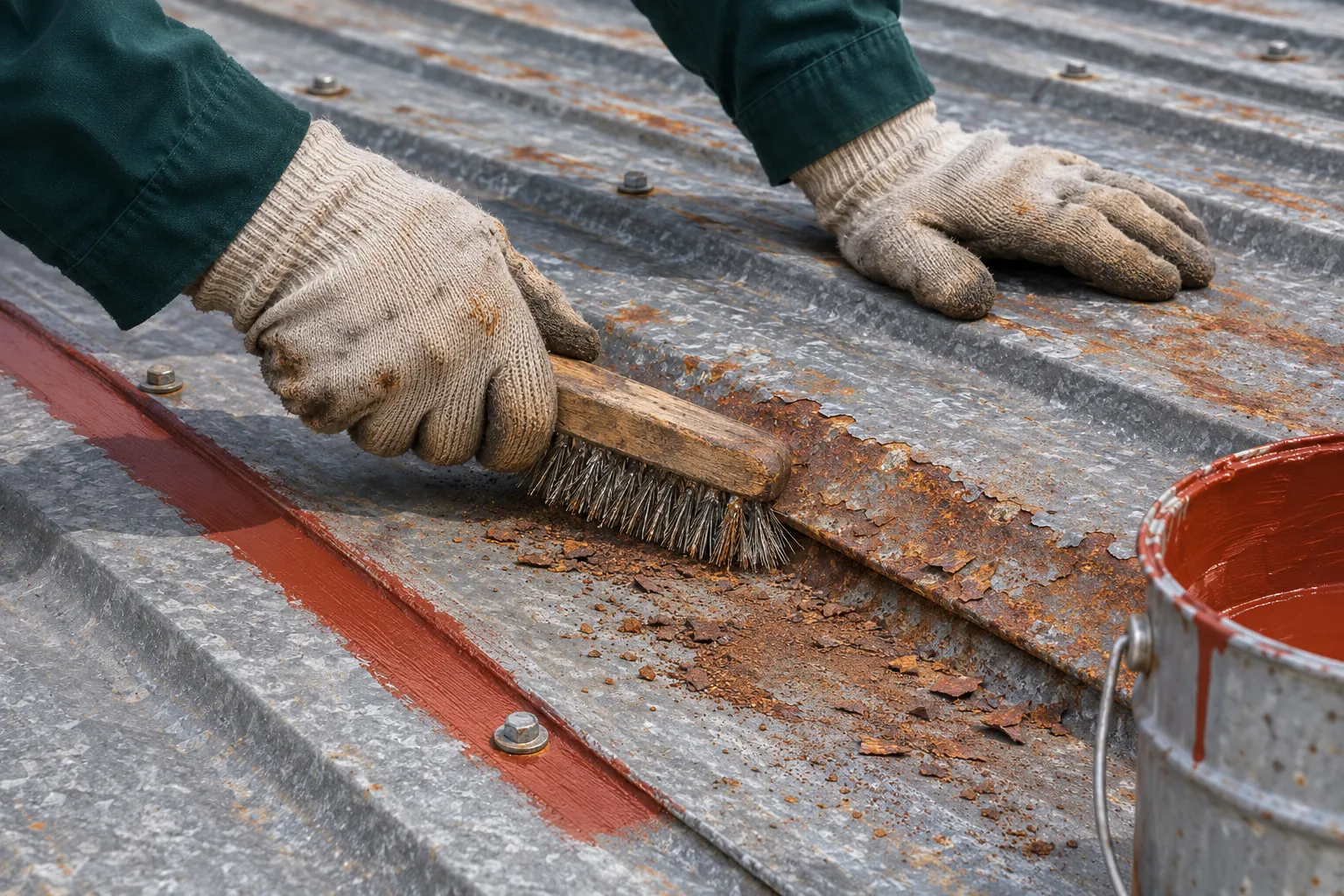
Sun breaks down the factory paint until it chalks, and rust spots form where scratches reach the steel. Wire brushing and a rust primer stop that spread under the new coating.
As a Bethlehem commercial metal roof coating contractor, we treat rust, reseal laps and screws, and coat steel roofs on warehouses, plants, and offices.
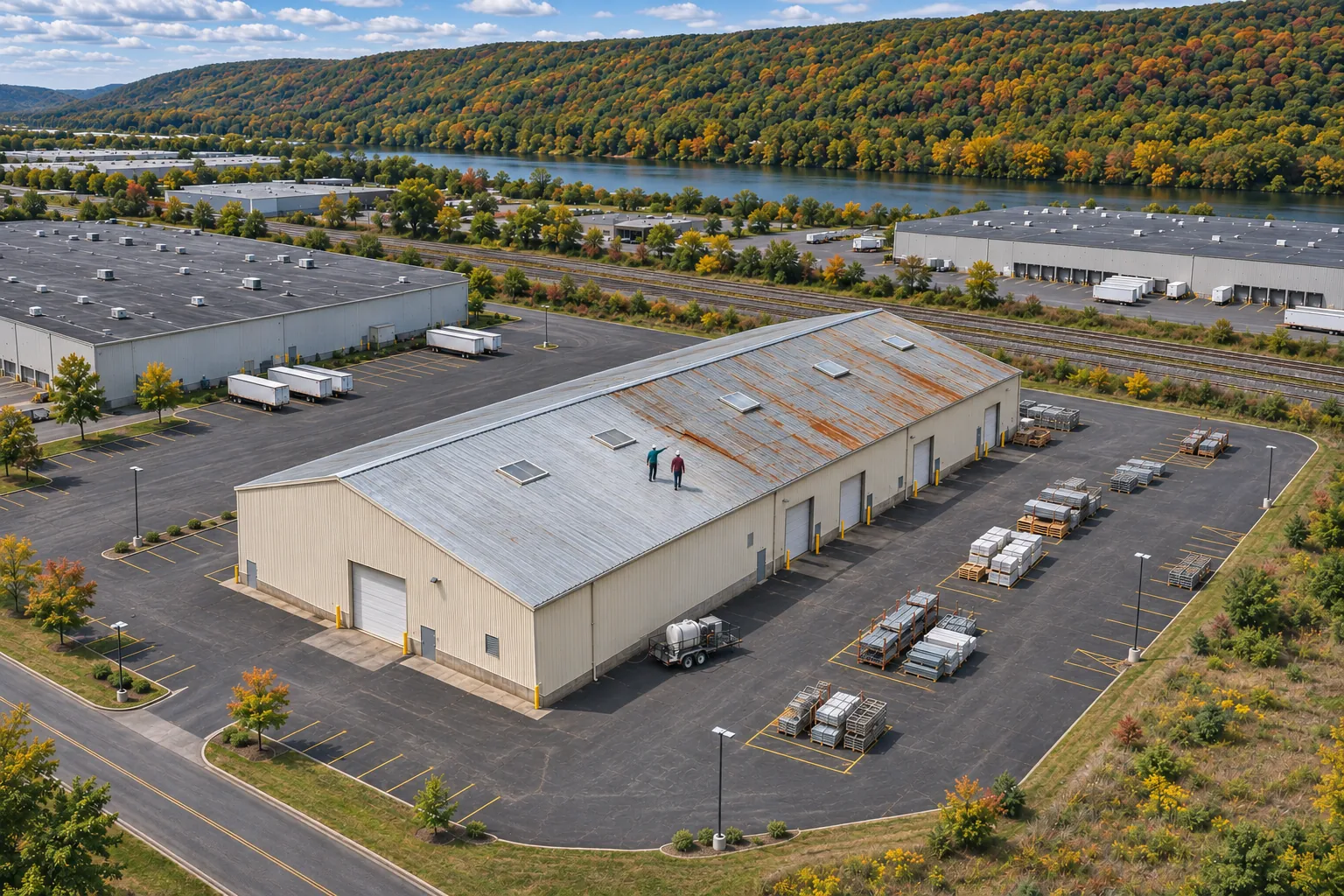
Bethlehem commercial metal roof coating suits steel that still holds its screws. Match your roof to a row to see where it usually lands.
| What You See On The Roof | Coat After Prep | Repair, Then Coat | Replace Panels |
|---|---|---|---|
| Light surface rust on ribs and laps | Usually fits | Sometimes | Rarely |
| Screws backed out along one purlin line | Sometimes | Usually fits | Rarely |
| Hail dents with no splits in the metal | Usually fits | Sometimes | Rarely |
| Panel ends rusted through at the eave | Rarely | Sometimes | Usually fits |
| Old coating flaking off in sheets | Rarely | Usually fits | Sometimes |
Steel roofs fail at the same five details. Each one gets its own repair before the coating goes over it.
Sun breaks down the factory paint until it chalks, and rust spots form where scratches reach the steel. Wire brushing and a rust primer stop that spread under the new coating.
Water creeps into end laps by capillary action, and rust bleeds out of the overlap. Laps are cleaned, primed, and sealed with butyl or reinforced mastic before the topcoat.
Neoprene washers shrink and split after years of heat and freeze cycles. Screws are tightened, swapped for larger ones where holes have widened, and capped or sealed.
Dents alone rarely leak. Splits at the rib, cracked laps, and loosened screws near impacts get repaired, while cosmetic dents are cleaned and coated with the field.
Ridge caps loosen in wind and eave trim rusts behind gutters. Closures are replaced, trim is refastened, and every joint gets sealant before coating.
Steel roofs here usually take one of these four coating builds. The inspection and your recoat plans pick between them.
Water-based acrylic over a rust-inhibiting primer suits pitched steel that drains well. It recoats with acrylic or silicone later and needs dry, mild days to cure.
A primer keeps silicone gripping painted steel, and the silicone handles areas where water sits near gutters. Future recoats have to be silicone.
Polyester fabric set into base coat at every lap and penetration adds strength where panels move most, then the field gets two full coats.
For steel buildings that need insulation, foam goes over the panels and a coating protects it. Panel attachment is checked first.
Coating steel that still holds its screws keeps the panels working without new metal. These are the gains owners notice.
Priming rust while it is still on the surface keeps it from eating through the panel. Steel that would have needed replacing in spots stays in service.
Sealed screw heads and coated washers close the most common leak path on a metal roof, the hundreds of small holes along each purlin.
Fabric and mastic at the laps flex with the panels through hot days and cold nights. Leaks that came back after each winter have less room to return.
Coating happens on top of the roof, so warehouse racks, offices, and production lines below stay in use. Only short steps, like spraying near intakes, need planning.
Call or start a ballpark estimate. Rust caught at the surface costs far less to coat than panels that need replacing.
Get A Free Ballpark EstimateSteel roofs get extra time on rust and fasteners. Here is the order we follow.
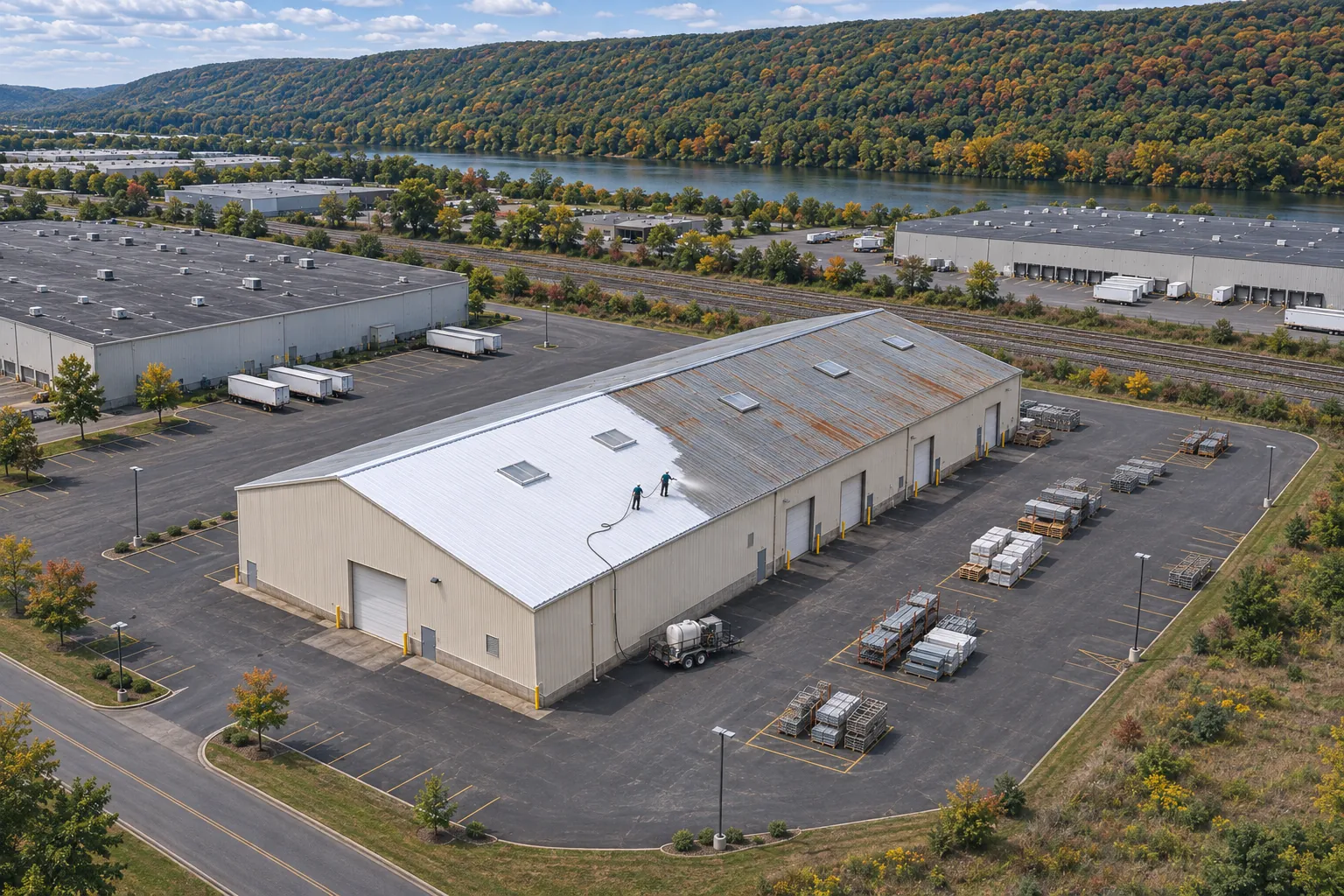
Every fastener line, lap, and trim piece is checked, and we probe rusted spots to see whether steel is still firm under the scale. Photos mark each repair.
Loose and stripped screws are replaced, end laps are opened where needed and resealed, and missing closures go back in at the ridge and eaves.
A pressure wash takes off chalk. Rust spots are brushed down to firm steel, then primed with a rust-inhibiting primer matched to the topcoat.
Base coat goes over the field with fabric at laps and penetrations, then a topcoat finishes it. Wet film readings confirm thickness along the way.
Steel is the main job, but some roofs or roof sections call for a different system.
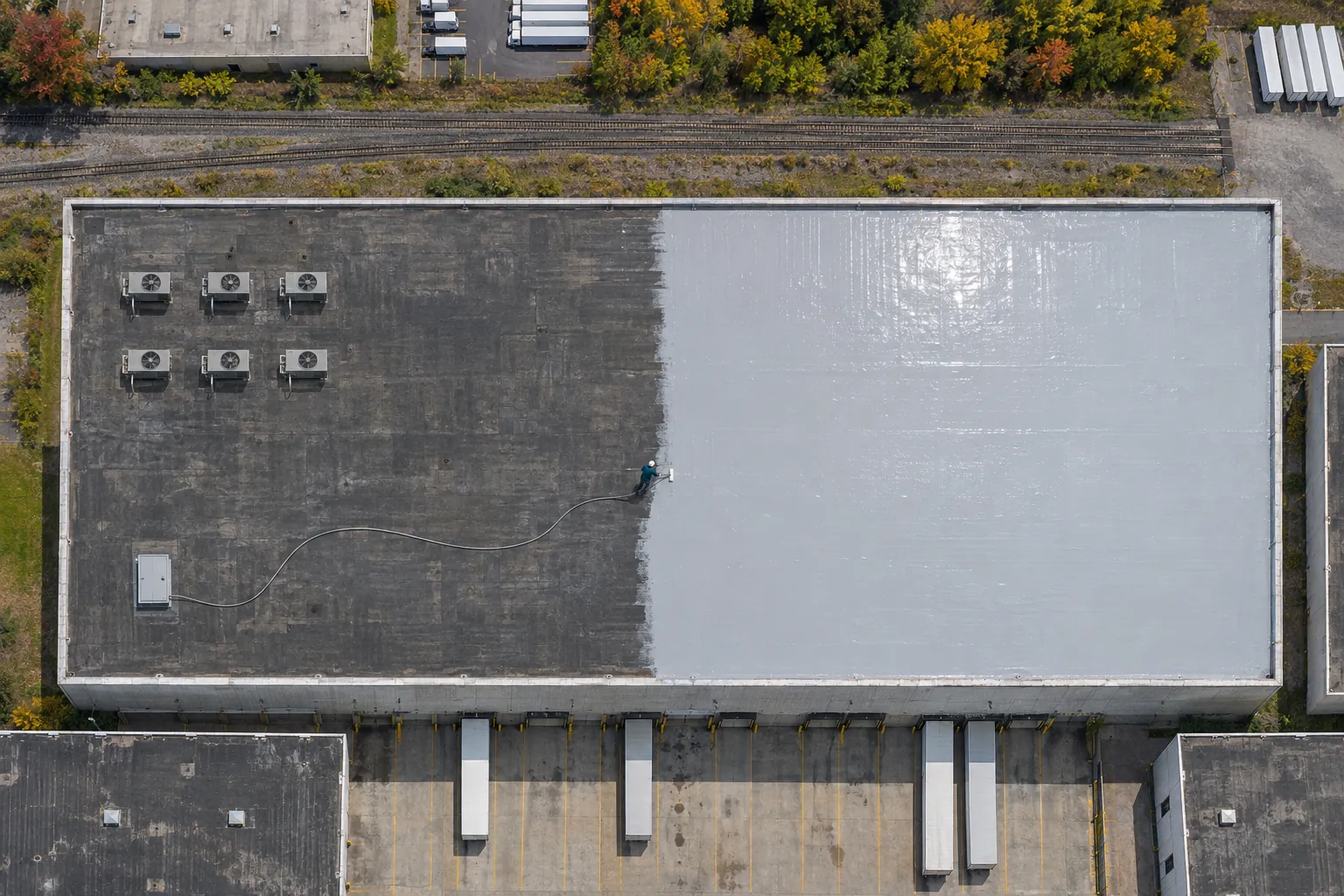
For flat sections and gutters where water sits after storms.
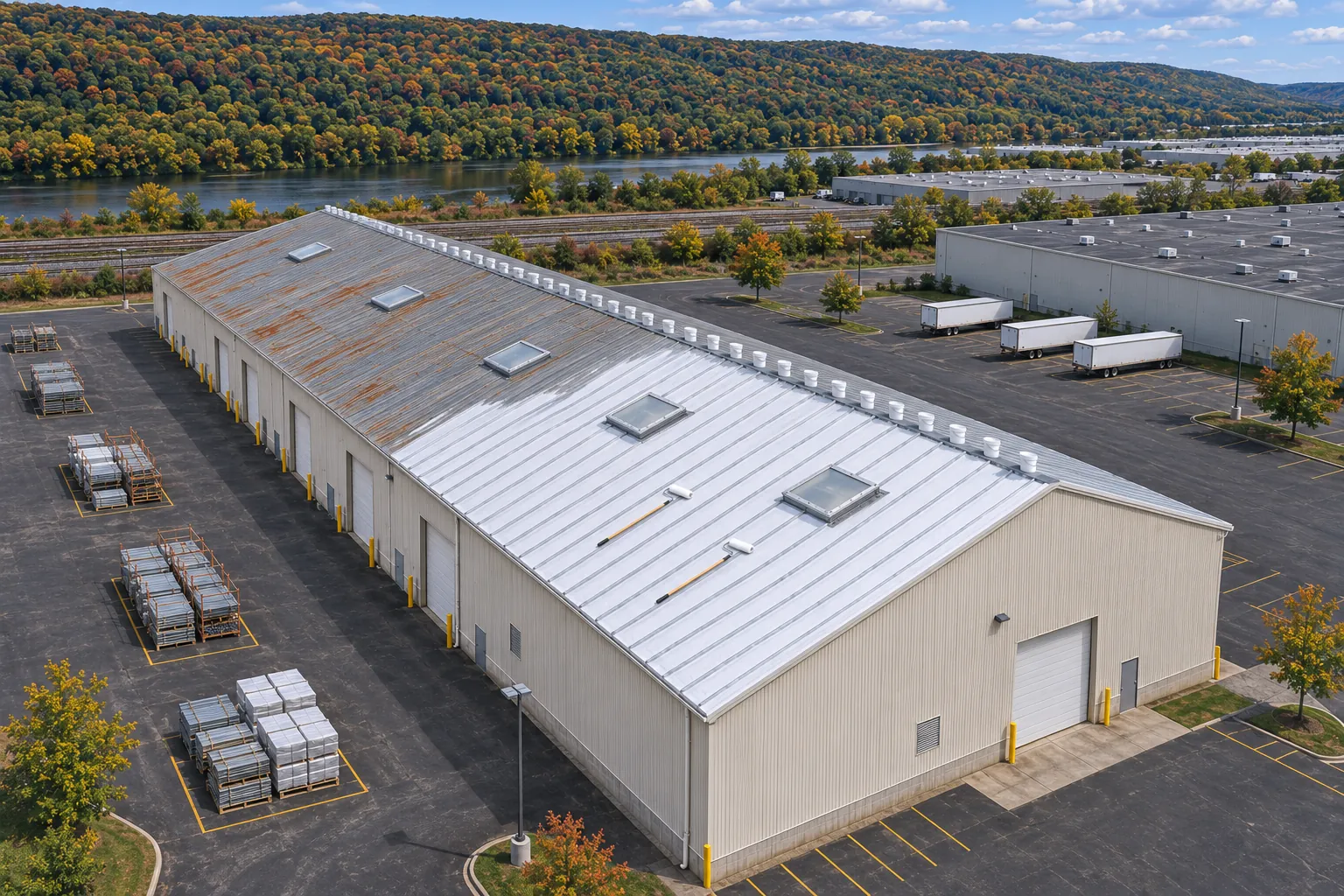
A lighter recoat path for pitched steel that drains quickly.
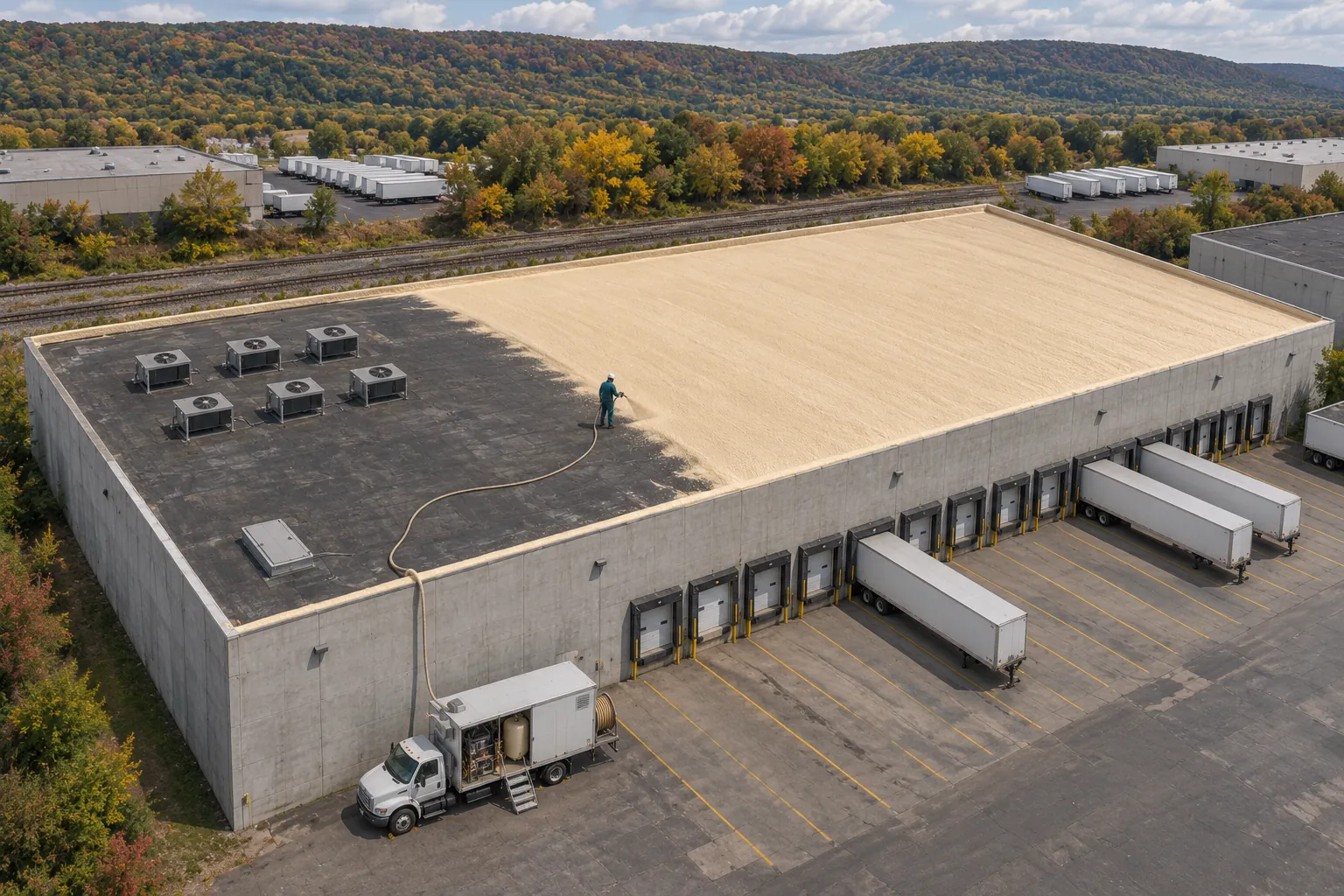
When the steel building also needs insulation over the deck.
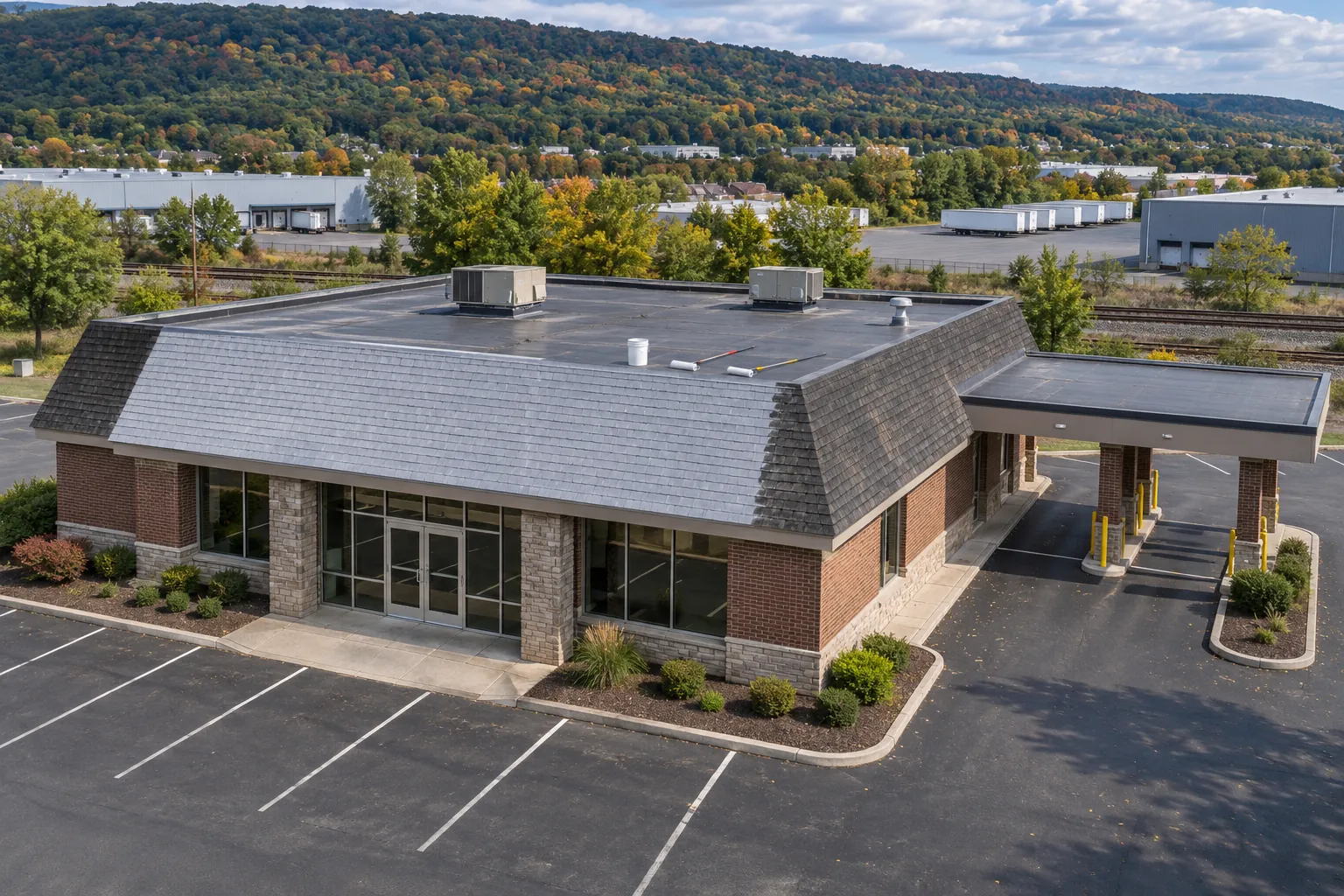
Shingle mansards and offices on the same property.
Answers about coating steel roofs on commercial buildings.
It depends on slope, drainage, and recoat plans more than brand. Acrylic suits pitched steel that sheds water and recoats easily. Silicone handles slow-draining areas but accepts only silicone later. On a medical office or other busy roof, service traffic around units matters too, so we look at walkway wear before picking a product.
Preparation, film thickness, sun, and foot traffic decide coating life more than one product name. A thick silicone or a well-built acrylic system with reinforced laps holds up, and regular recoats extend either one. We give you the manufacturer data for the system we propose so you can compare it directly.
On exposed-fastener steel, yes. Each screw is checked for grip first; a loose screw with a sealed head can still move and break the coating around it. Screws that spin get replaced with oversized ones, then washers and heads are sealed. That work is listed on its own line in the proposal.
Coating a metal roof after hail works once the damage is sorted. Cosmetic dents get coated with the rest of the field. Splits at ribs, cracked laps, and screws loosened by impacts get repaired first, since a coating film cannot rebuild torn metal or tighten a fastener.
Roof size, the number of repairs, and weather set the schedule. Coatings need dry steel and cure temperatures, so we plan around rain and cold nights and open only as many sections as can be finished in one working day. The proposal includes a working sequence for your building.
Send the roof size and where the rust shows, or call to book the inspection.